






Why Work With Us
Why choose The Brain Computer Corporation over other LED suppliers?

The Brain Computer Corporation has been delivering AV solutions in the Philippines for over 38 years — making us one of the longest-established audio-visual integration companies in the country. This longevity is not incidental. It reflects a track record of completed projects across retail, corporate, hospitality, education, healthcare, and government sectors; deep relationships with leading hardware manufacturers and technology partners; and a technical team with expertise that takes years of real-world installation experience to develop.
When you work with The Brain Computer Corporation, you are not buying a screen from a supplier. You are engaging a technical partner who will assess your space, specify the right solution for your context, install it to a professional standard, and support it for the life of the asset. We have seen the full evolution of LED display technology — from the earliest large-pitch panels to today's fine-pitch COB and MicroLED systems — and that accumulated knowledge informs every recommendation we make.
When you work with The Brain Computer Corporation, you are not buying a screen from a supplier. You are engaging a technical partner who will assess your space, specify the right solution for your context, install it to a professional standard, and support it for the life of the asset. We have seen the full evolution of LED display technology — from the earliest large-pitch panels to today's fine-pitch COB and MicroLED systems — and that accumulated knowledge informs every recommendation we make.
Who are some of The Brain Computer Corporation’s trusted clients?
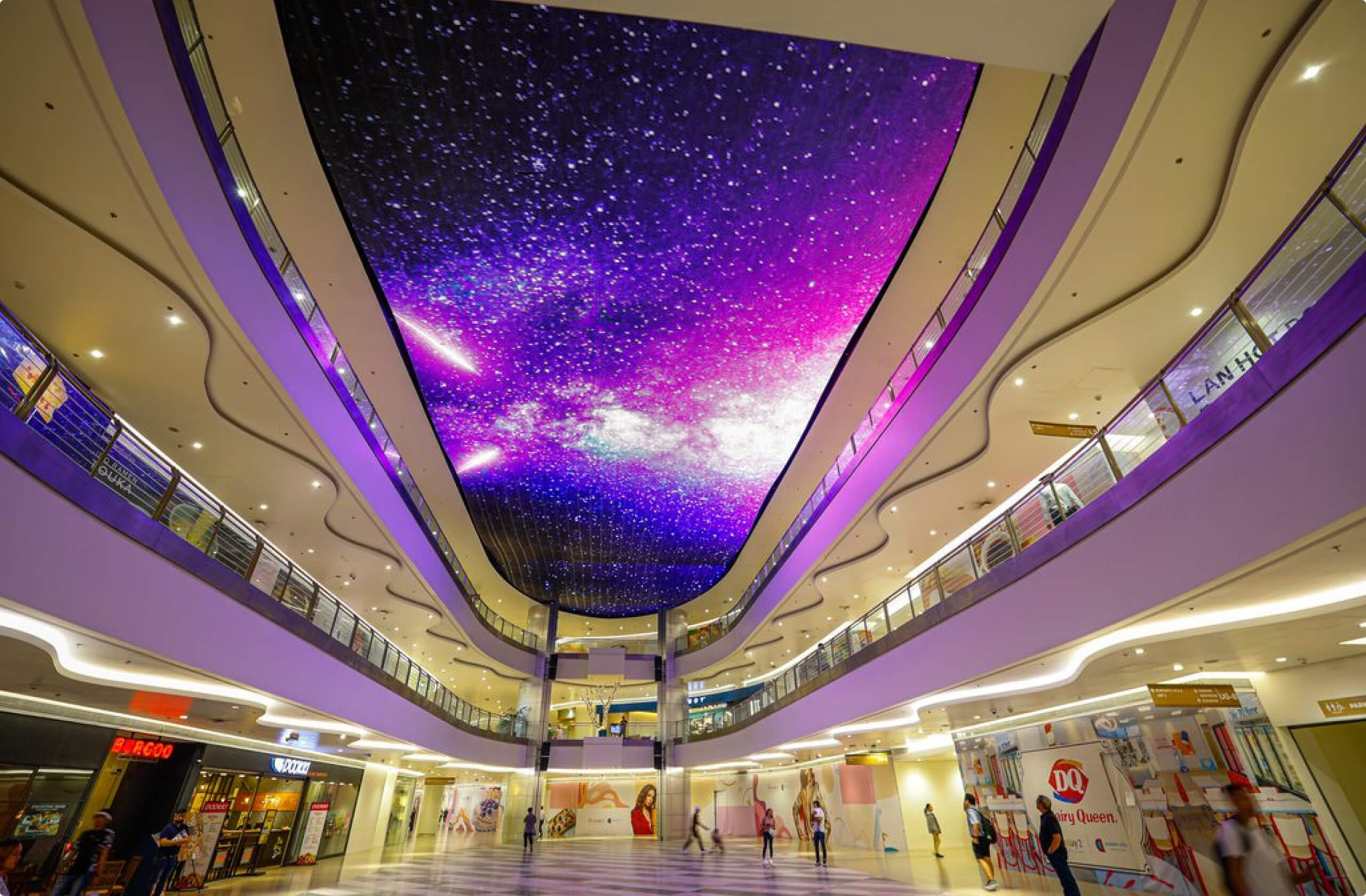
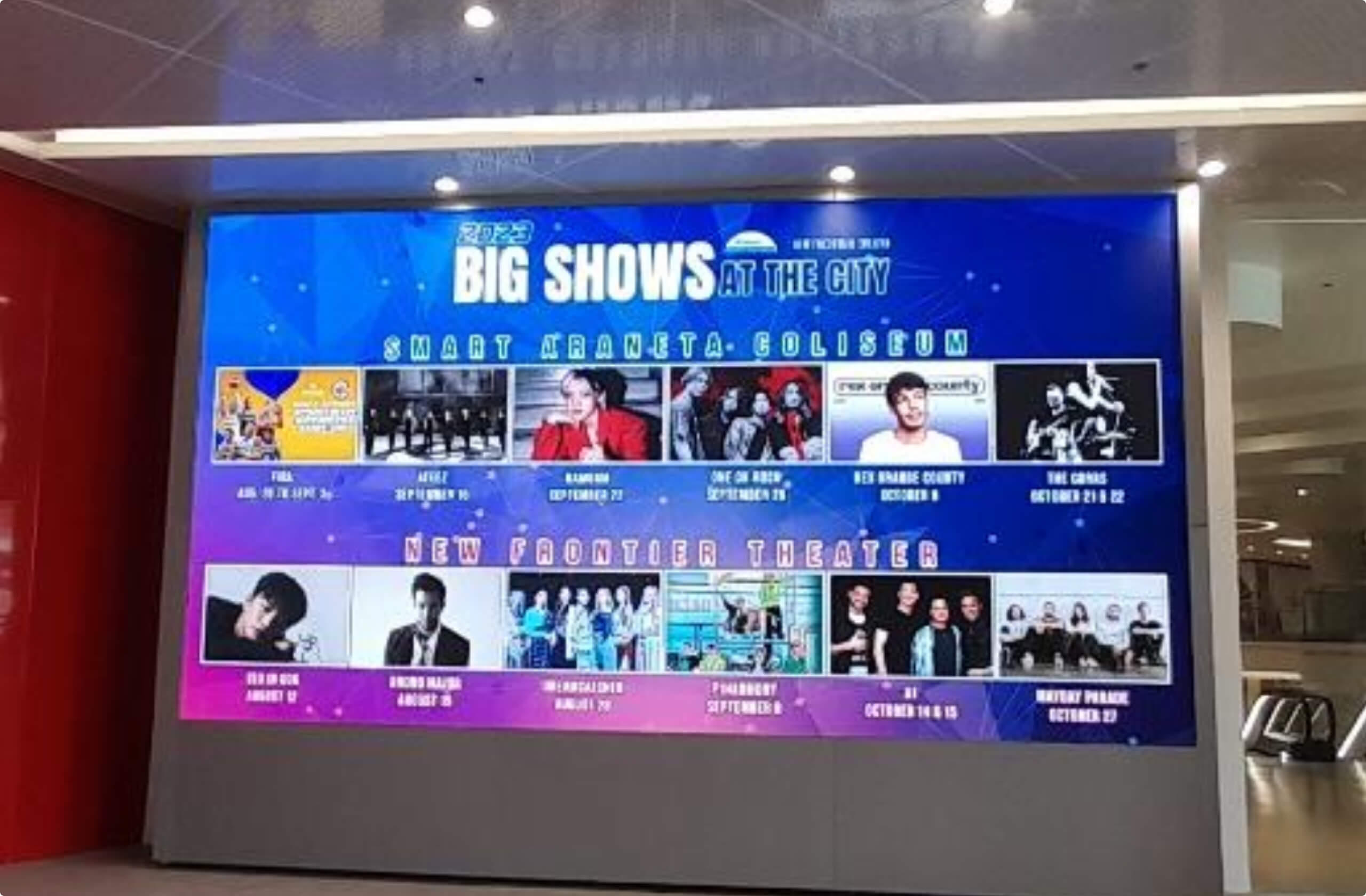
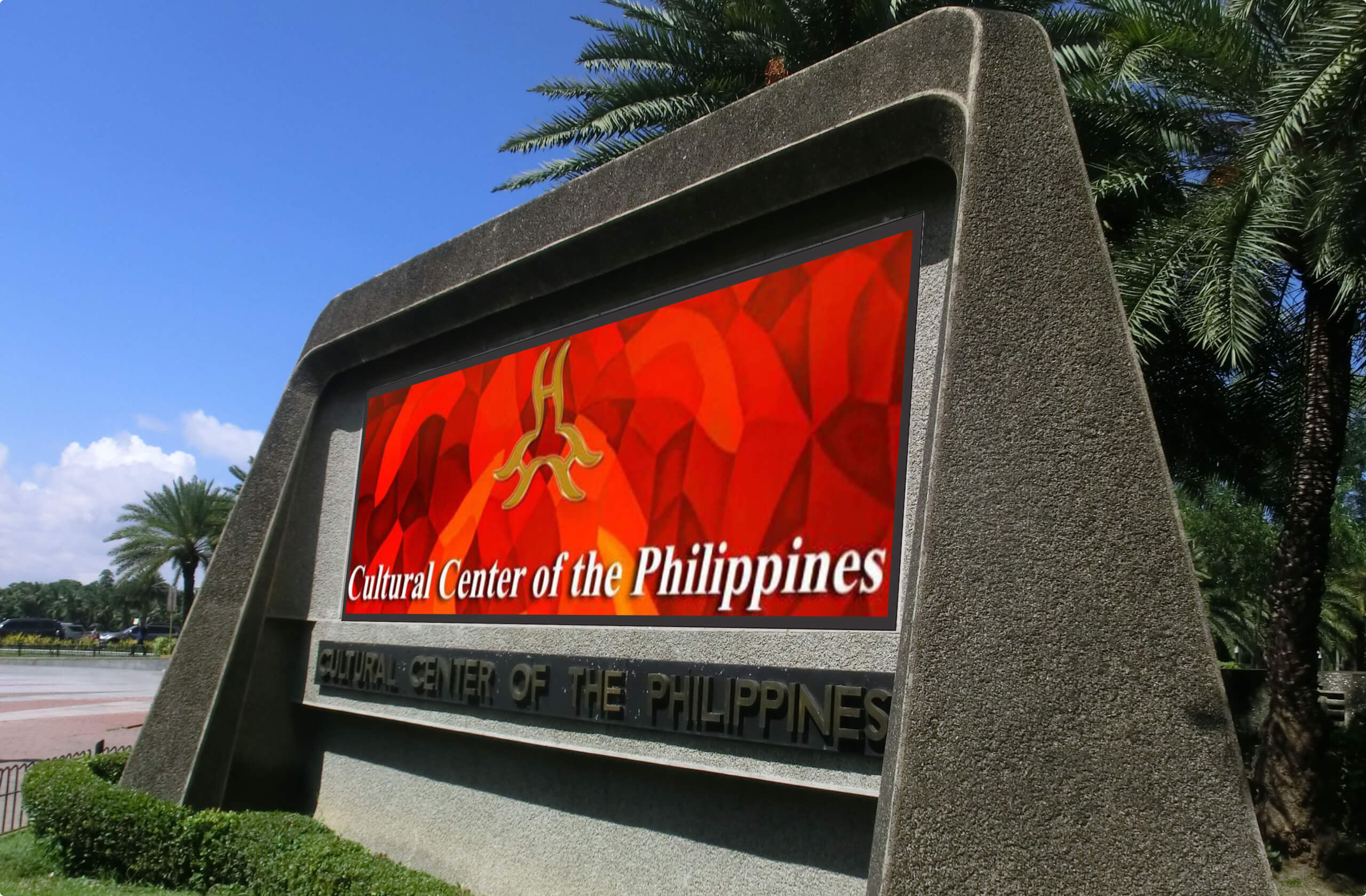
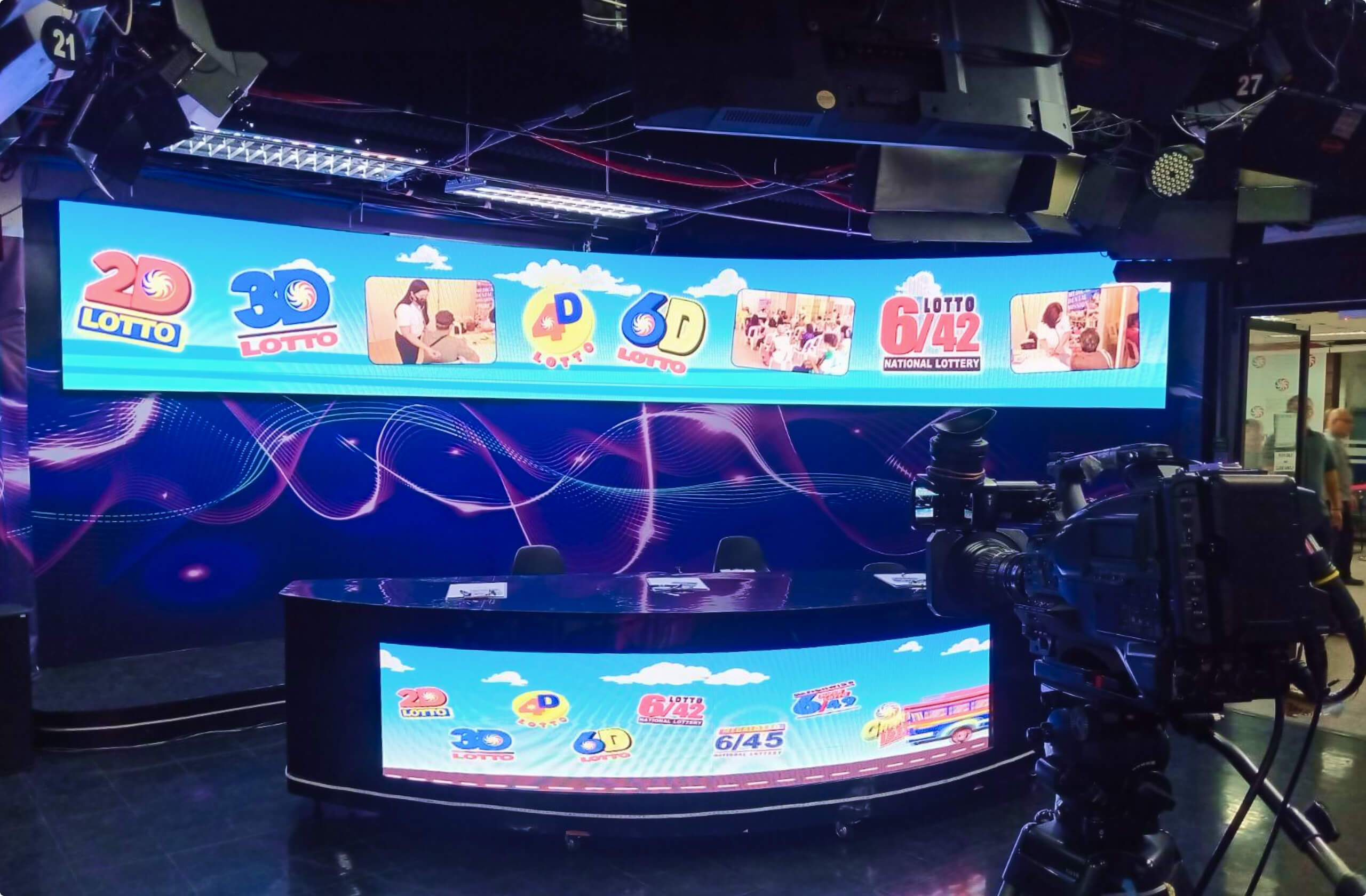
The Brain Computer Corporation has worked with a wide range of clients, including Gateway Mall, Ayala Malls Circuit, Smart Araneta Coliseum, Novotel, ABS-CBN, Giordano, PAGCOR, and the Cultural Center of the Philippines, among many others.
Do you serve clients outside of Metro Manila?
Yes. The Brain Computer Corporation serves clients across the Philippines, including key commercial centres in Cebu, Davao, Iloilo, Bacolod, Cavite, La Union, Bataan and other provincial and regional locations.
For projects outside Metro Manila, our team coordinates site visits, installation schedules, and after-sales support based on each project's specific location and requirements. Contact us to discuss your project location and we will advise on timelines and logistics.
For projects outside Metro Manila, our team coordinates site visits, installation schedules, and after-sales support based on each project's specific location and requirements. Contact us to discuss your project location and we will advise on timelines and logistics.
LEDs and Specifications
What is an LED wall display?
An LED wall display is a large-format visual screen made up of individual LED (Light-Emitting Diode) modules or panels assembled together to create a seamless, high-brightness display surface. Unlike traditional LCD screens, LED walls produce their own light directly through the diodes — eliminating the need for a backlight and delivering superior brightness, contrast, and colour accuracy.
LED walls are used across retail stores, corporate lobbies, event stages, hotel ballrooms, churches, government offices, transportation hubs, and outdoor advertising.
They are available in indoor, semi-outdoor, and outdoor-rated configurations, and can be custom-built to virtually any size or shape.
LED walls are used across retail stores, corporate lobbies, event stages, hotel ballrooms, churches, government offices, transportation hubs, and outdoor advertising.
They are available in indoor, semi-outdoor, and outdoor-rated configurations, and can be custom-built to virtually any size or shape.
What is pixel pitch, and why does it matter?
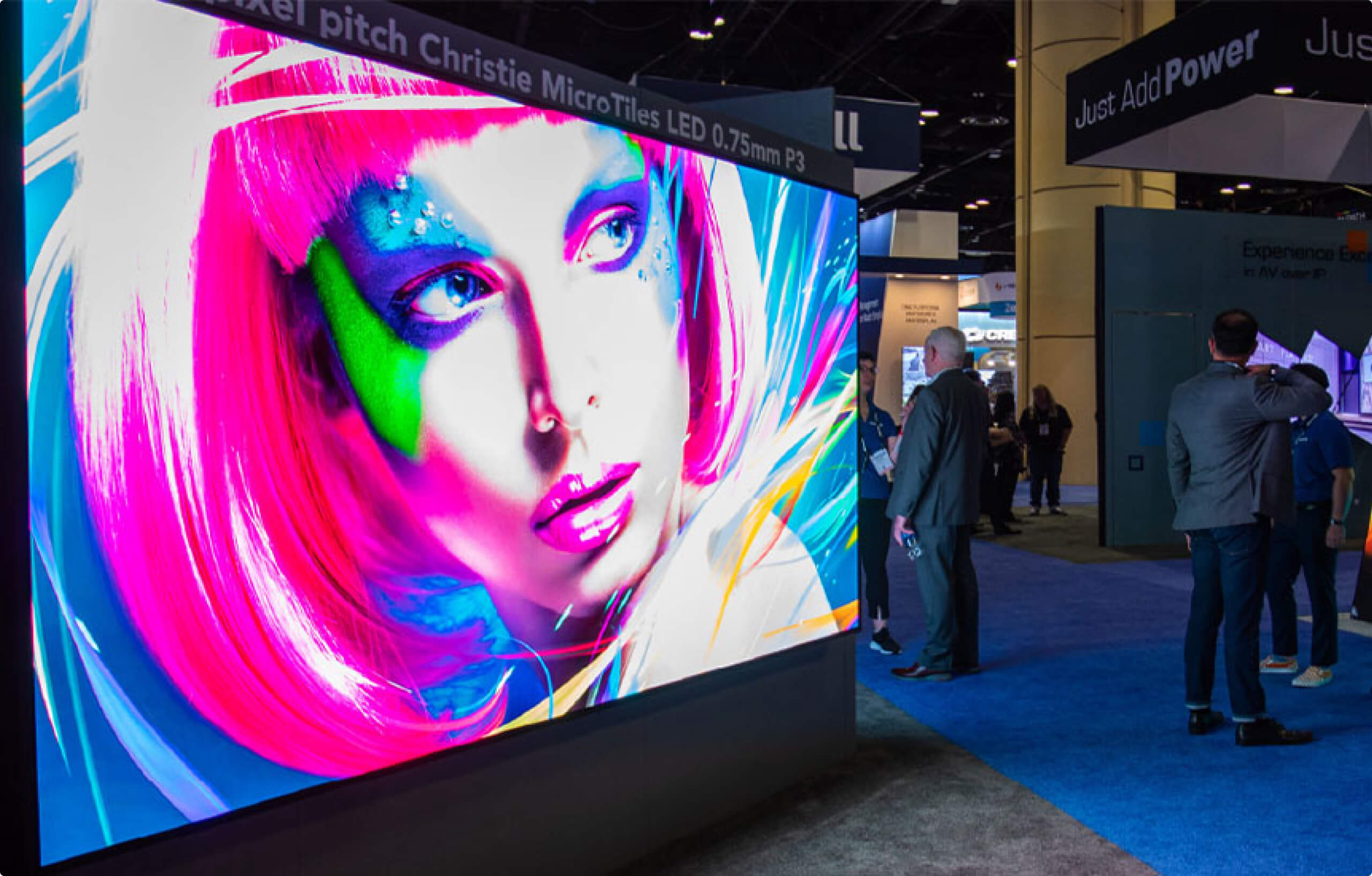
Pixel pitch is the distance in millimetres between the centre points of two adjacent LED pixels on a display. It is the single most important specification in an LED wall purchase because it determines the minimum viewing distance at which the image appears smooth and seamless to the human eye.
A smaller pixel pitch (e.g., P1.5 or P2.0) means more pixels per square metre, producing sharper images at close range. A larger pixel pitch (e.g., P4.0 or P6.0) suits displays viewed from greater distances and is significantly more cost-effective.
A smaller pixel pitch (e.g., P1.5 or P2.0) means more pixels per square metre, producing sharper images at close range. A larger pixel pitch (e.g., P4.0 or P6.0) suits displays viewed from greater distances and is significantly more cost-effective.
Is it safe to install LED screens outdoors in the Philippines?
Yes — when correctly specified and installed. The Philippines' tropical climate presents specific challenges for outdoor LED installations, including high humidity, intense UV exposure, seasonal typhoon winds, and sustained ambient temperatures. A properly specified outdoor LED wall addresses all of these factors:
- IP65 weatherproofing protects against rain and dust ingress
- UV-stabilised cabinet materials prevent degradation from prolonged sun exposure
- Thermal management systems (passive ventilation or active cooling) manage heat build-up in high-temperature environments
- Wind load engineering ensures the mounting structure can withstand typhoon-strength winds when required
- Salt-air resistance is a consideration for coastal installations in areas like Manila Bay, Cebu, Davao, and other waterfront locations
The Brain Computer Corporation conducts site assessments before any outdoor installation to confirm that the display specification matches the actual environmental conditions of your location.
What is the difference between SMD and COB LED technology?
SMD (Surface-Mounted Device) and COB (Chip-on-Board) are the two primary LED packaging technologies used in commercial display panels. They differ in how the individual LED chips are physically constructed and protected.
SMD LED mounts individual red, green, and blue chips as discrete components on a circuit board. It is the established standard technology, widely available across all pixel pitch ranges, cost-effective, and well-supported by local technicians. Its primary limitation is that the exposed chip structure is vulnerable to physical impact, dust, and humidity.
COB LED encapsulates LED chips directly onto the circuit board under a smooth resin layer, creating a flush, impact-resistant surface. COB delivers approximately 50% higher contrast ratios than comparable SMD panels, offers better resistance to physical damage and moisture, and typically requires less frequent maintenance. For Philippine deployments — where humidity, dust, and regular surface cleaning are operational realities — COB is increasingly the preferred choice for premium indoor applications.
COB panels carry a price premium of approximately 10–20% over comparable SMD specifications, which is frequently offset by lower maintenance costs over a five-to-seven-year ownership period.
SMD LED mounts individual red, green, and blue chips as discrete components on a circuit board. It is the established standard technology, widely available across all pixel pitch ranges, cost-effective, and well-supported by local technicians. Its primary limitation is that the exposed chip structure is vulnerable to physical impact, dust, and humidity.
COB LED encapsulates LED chips directly onto the circuit board under a smooth resin layer, creating a flush, impact-resistant surface. COB delivers approximately 50% higher contrast ratios than comparable SMD panels, offers better resistance to physical damage and moisture, and typically requires less frequent maintenance. For Philippine deployments — where humidity, dust, and regular surface cleaning are operational realities — COB is increasingly the preferred choice for premium indoor applications.
COB panels carry a price premium of approximately 10–20% over comparable SMD specifications, which is frequently offset by lower maintenance costs over a five-to-seven-year ownership period.
Is it easy to create and manage content for an LED wall?
Modern LED wall content management systems (CMS) are designed for non-technical users. Most platforms allow content to be created, scheduled, and updated through a web-based interface or mobile application — no programming knowledge required. Standard content types include images, video files, slideshows, live feeds, social media integrations, and real-time data displays such as news tickers or time/weather widgets.
For Philippine businesses managing a single display, a straightforward CMS with drag-and-drop content scheduling is typically sufficient. For multi-location retail chains, corporate campus networks, or government deployments spanning multiple screens across different sites, enterprise CMS platforms offer centralised management, role-based access controls, and automated content scheduling by zone, time of day, or data trigger.
For Philippine businesses managing a single display, a straightforward CMS with drag-and-drop content scheduling is typically sufficient. For multi-location retail chains, corporate campus networks, or government deployments spanning multiple screens across different sites, enterprise CMS platforms offer centralised management, role-based access controls, and automated content scheduling by zone, time of day, or data trigger.
How long do LED walls last?
The theoretical lifespan of commercial LED technology is commonly cited at 100,000 hours — approximately 11 years of continuous 24/7 operation. In practical commercial deployments, well-maintained indoor LED walls typically achieve a realistic service life of 7 to 10 years. Outdoor installations, subject to greater environmental stress, typically last 5 to 8 years before brightness degradation requires replacement.
Several factors materially affect actual lifespan:
Several factors materially affect actual lifespan:
- Operating brightness: Consistently running a display at 100% brightness accelerates LED chip degradation. Adaptive brightness management can extend lifespan by 20–30%.
- Ambient temperature: Every sustained 10°C increase above optimal operating temperature approximately halves the effective lifespan of LED components. Adequate ventilation and thermal management are critical in Philippine climate conditions.
- Maintenance frequency: Displays that receive regular cleaning, calibration, and preventive maintenance consistently outlast neglected installations of identical specification.
- Content management: Sustained display of full-white or single-colour full-screen images places maximum current load on all LED channels simultaneously and accelerates differential colour decay.
How do I know which LED wall is right for my space?
The right LED wall for your space is determined by four variables:
- Primary viewing distance: How far away will most viewers be from the screen? This determines the correct pixel pitch.
- Installation environment: Indoor, semi-outdoor, or outdoor? This determines brightness, IP rating, and weatherproofing requirements.
- Content type: Will the display show video, static images, text-heavy content, or a mix? Text-heavy content requires finer pixel pitch at any given viewing distance.
- Available space and structure: What are the width, height, and depth constraints of the installation area? What structural support is available?
Installation, Service, and Warranty
Do you supply and install both indoor and outdoor LED walls?
Yes. The Brain Computer Corporation supplies and installs LED walls and LED screens for both indoor and outdoor environments. Our indoor LED screen panels are ideal for retail stores, corporate lobbies, churches, and event venues.
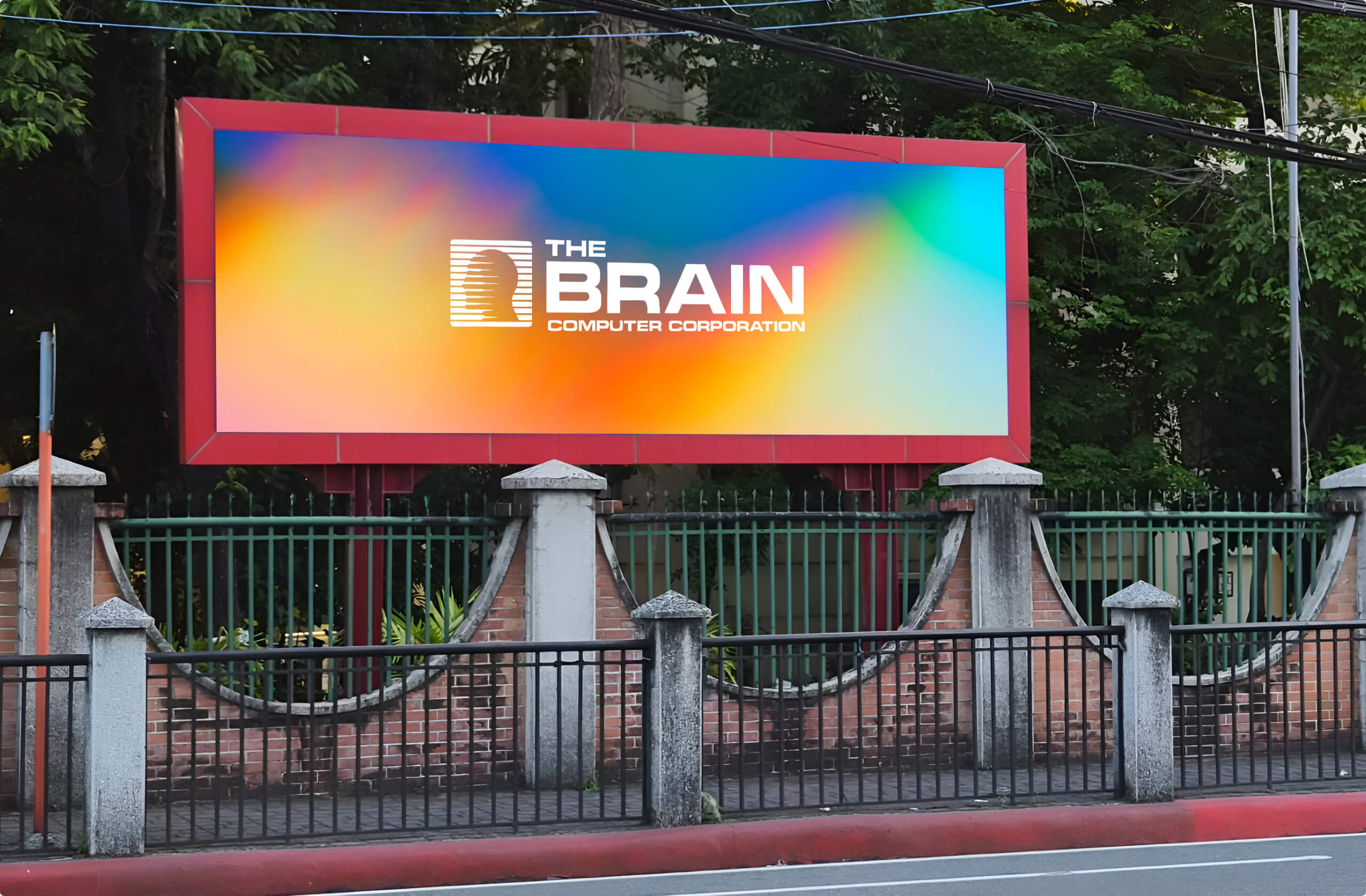
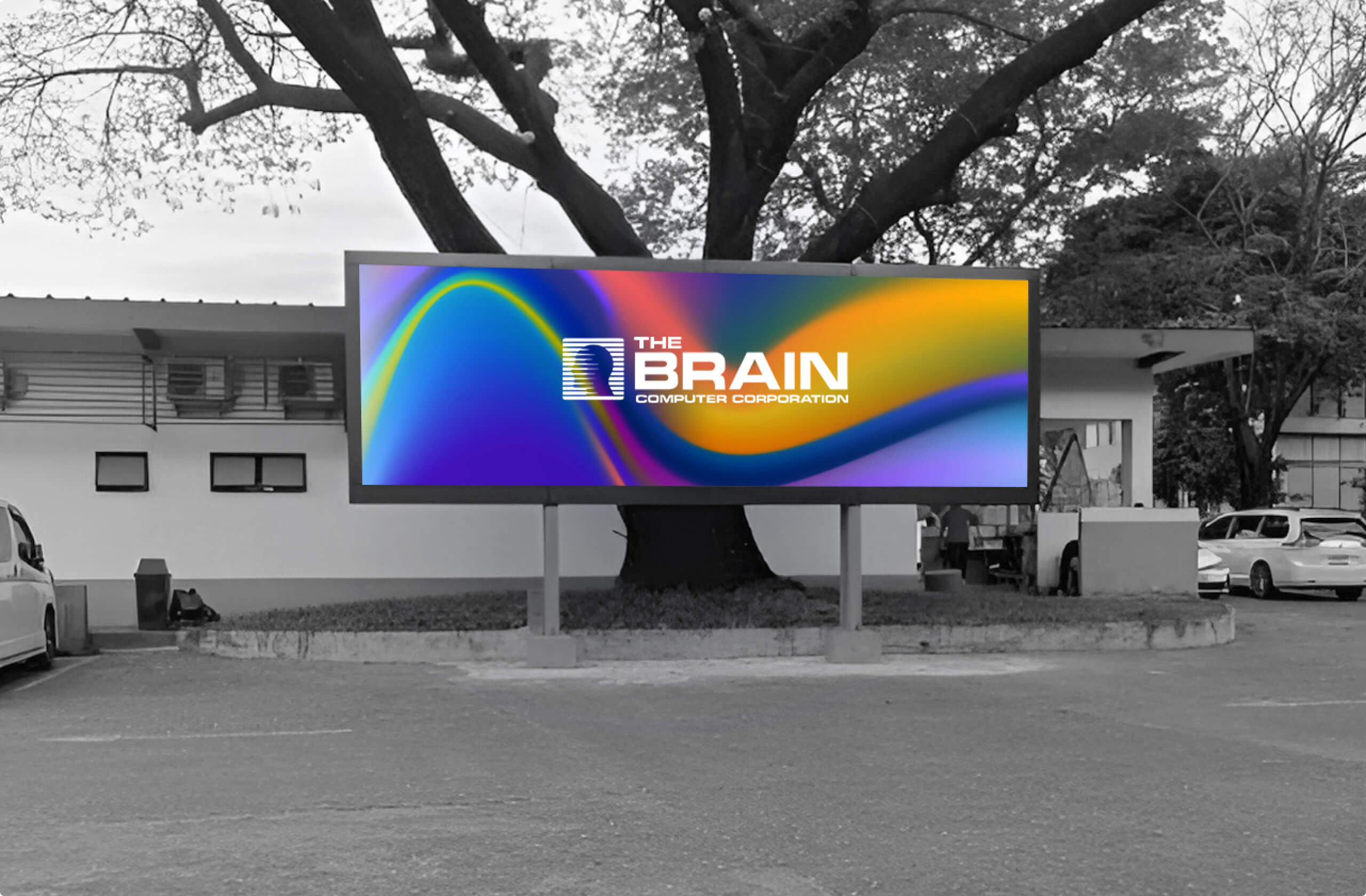
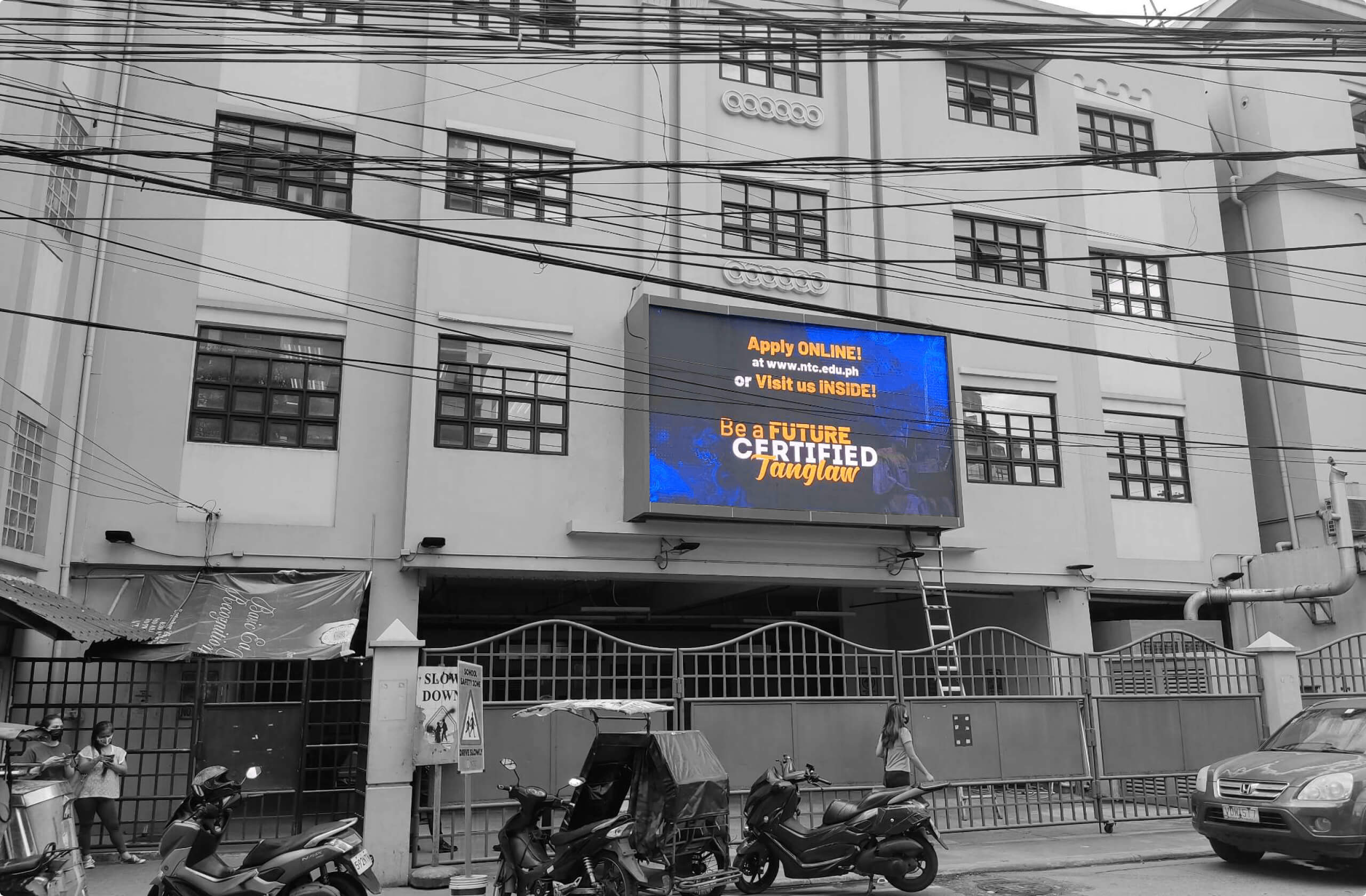
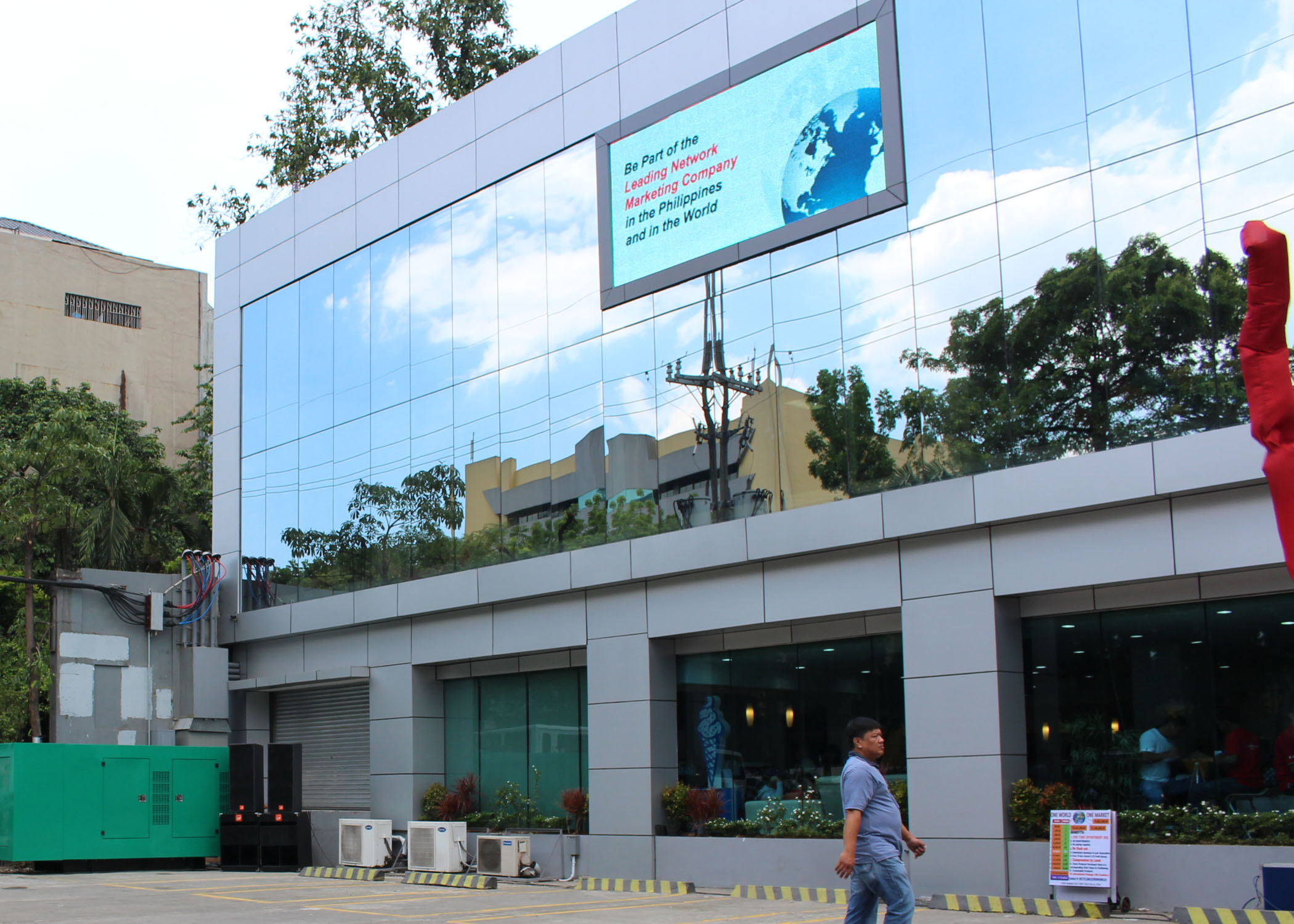
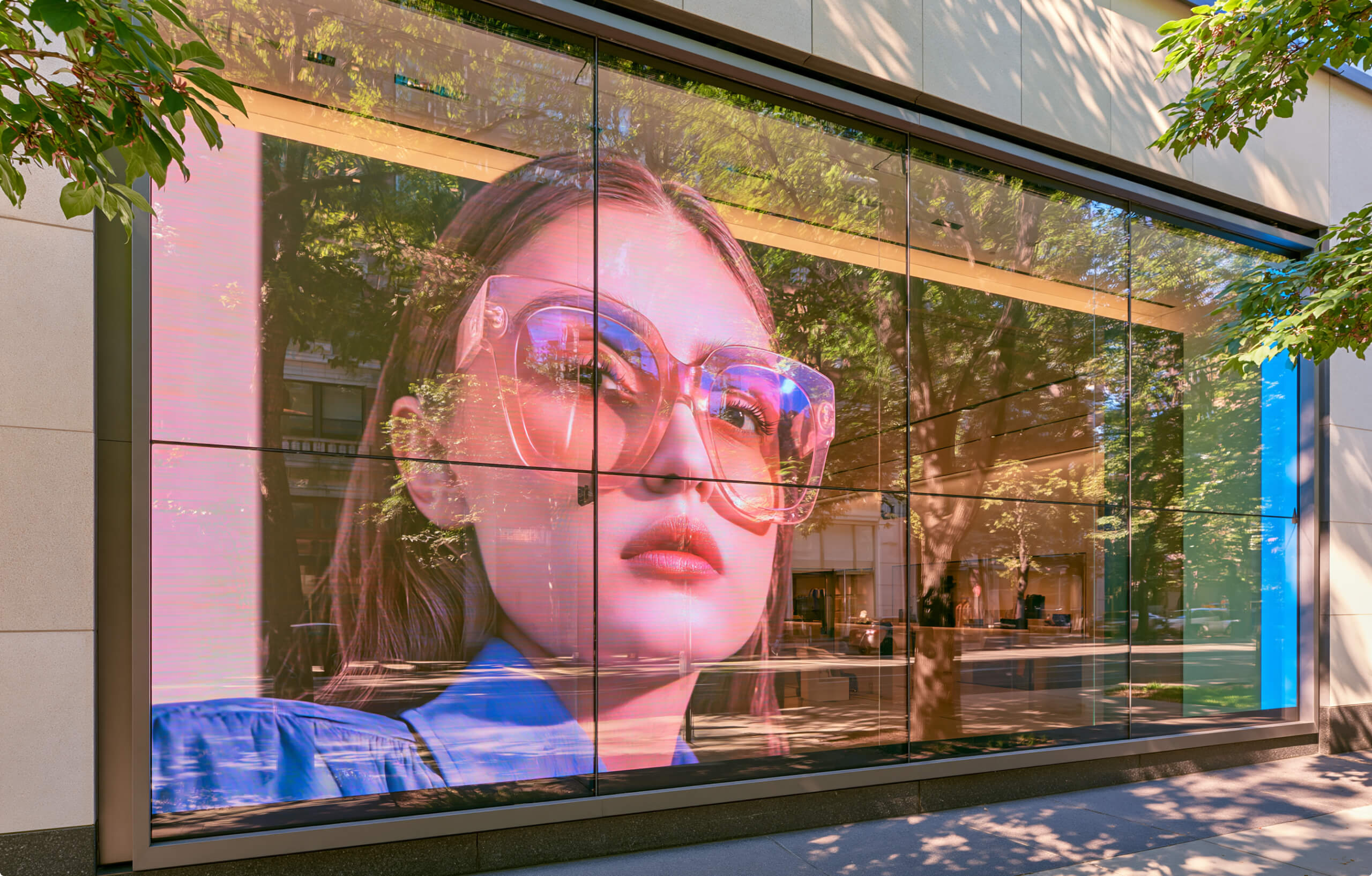
Our outdoor LED wall displays are weatherproofed, high-brightness, and built to stay visible in direct sunlight — perfect for building facades, storefronts, and open-air venues across the Philippines.
Our outdoor LED wall displays are weatherproofed, high-brightness, and built to stay visible in direct sunlight — perfect for building facades, storefronts, and open-air venues across the Philippines.
Can you provide custom-shaped LED displays — like cubes, spheres, strips, or transparent LED screens?
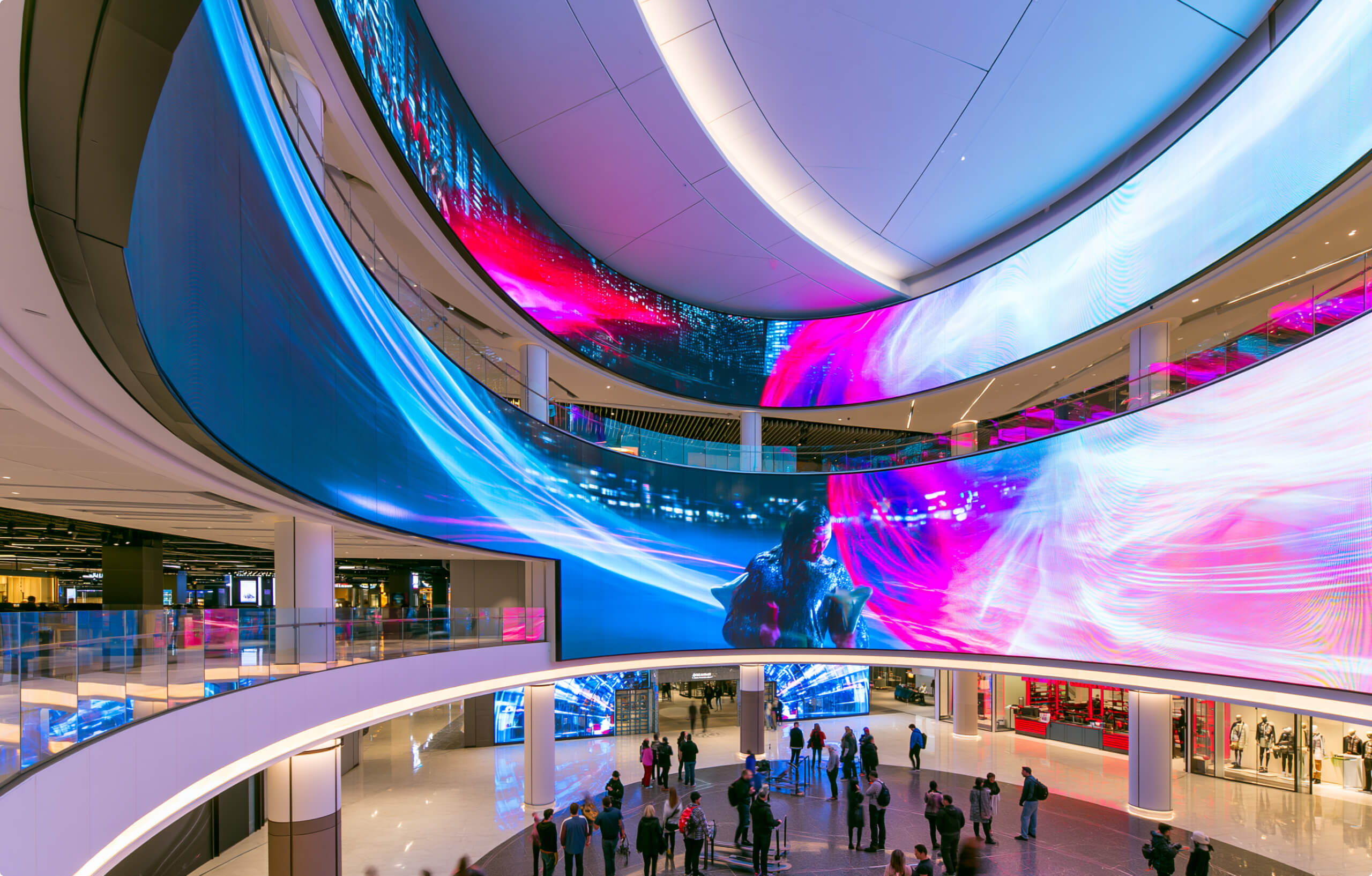
Yes. We supply and install custom-shaped LED screen panels in virtually any form — including cube displays, sphere LED walls, LED strip configurations, and transparent LED wall displays.
Whether you need a creative installation for a retail activation, an event stage, or an architectural feature, our team designs and builds custom LED wall solutions matched to your exact space and vision. If you can imagine the shape, we can build the display.
Whether you need a creative installation for a retail activation, an event stage, or an architectural feature, our team designs and builds custom LED wall solutions matched to your exact space and vision. If you can imagine the shape, we can build the display.
Is delivery and installation included in the quotation?
Yes, delivery and installation are included in the quotation unless otherwise stated.
Do you provide spare parts for LED walls?
Yes, we provide spare parts for LED walls to support maintenance and long-term use.
What is your LED wall warranty policy?
Our LED walls come with a 2-year warranty, covering service and support within the warranty period.
Do you have in-house technicians for installation, servicing, and support?
Yes, we have in-house technicians who handle installation, servicing, and technical support.
Having in-house service capability means that when a maintenance issue arises, the same team that installed your system is the team that comes to resolve it — with direct knowledge of your specific installation, its configuration, and its history.
Having in-house service capability means that when a maintenance issue arises, the same team that installed your system is the team that comes to resolve it — with direct knowledge of your specific installation, its configuration, and its history.


