




Why Work With Us
Why choose The Brain Computer Corporation over other conference system suppliers?

The Brain Computer Corporation has delivered audio-visual and conferencing solutions in the Philippines for over 38 years. For conference system projects specifically, this experience includes:
- Authorised Televic partnership: As a supplier and integrator of Televic Conference systems, we provide access to one of the world's most respected conference, interpretation, and voting technology brands, backed by local system design, installation, and support expertise.
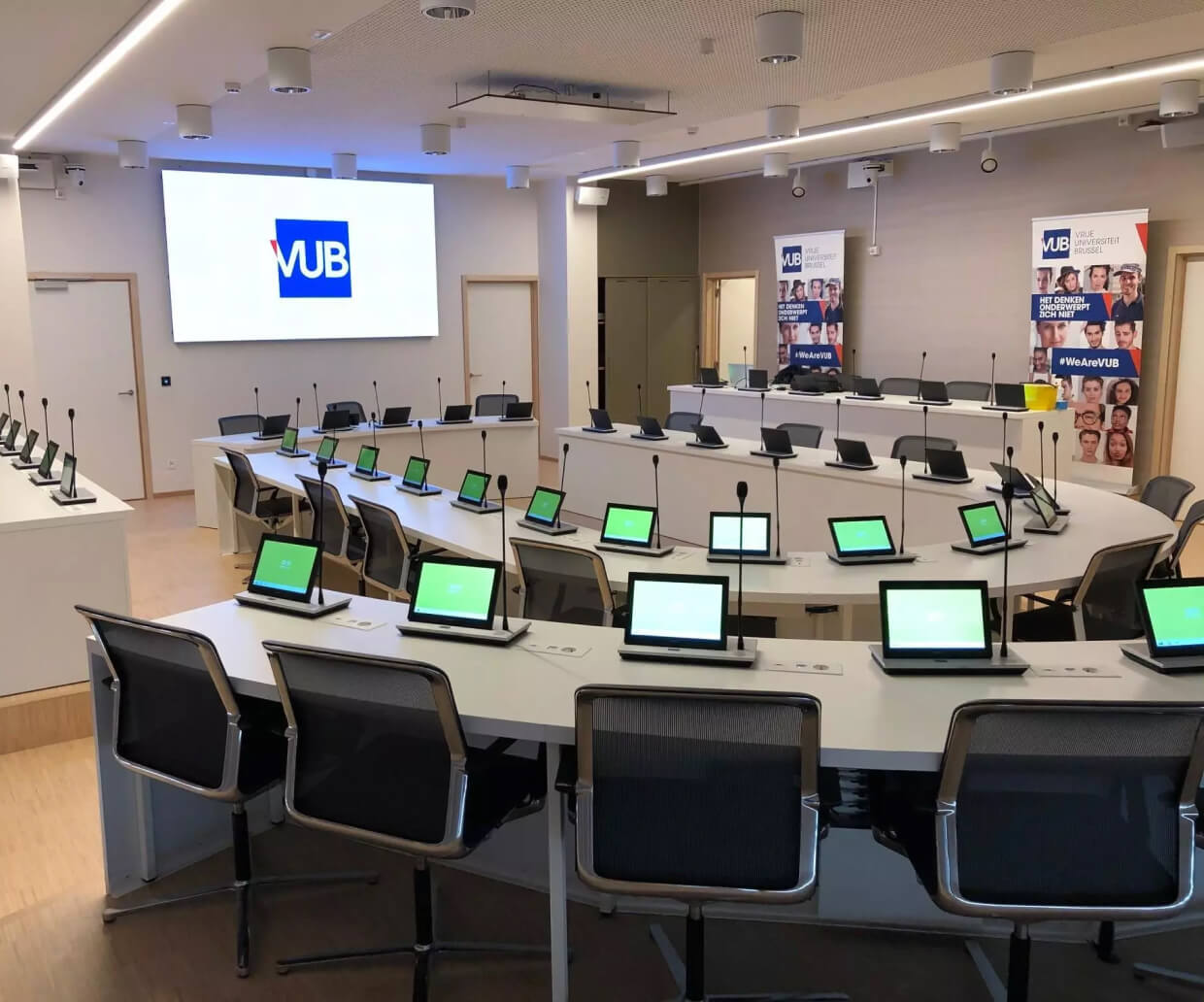
- Institutional and government project experience: Our portfolio includes conference system deployments for corporate boardrooms, government chambers, and institutional assembly halls across the Philippines.
- End-to-end project management: From initial requirements consultation and site assessment through system design, installation, and after-sales support, we manage the complete project lifecycle.
- PhilGEPS accreditation: For government and public-sector clients, we are accredited and experienced in Philippine public procurement processes for conference and AV technology projects.
- In-house technical team: Installation, configuration, and ongoing support are delivered by our own engineers, trained on the specific systems we supply — not outsourced to third parties unfamiliar with your installation.
Who are some of The Brain Computer Corporation’s trusted clients?
The Brain Computer Corporation has worked with a wide range of clients, including the Department of Finance, Malacañang Palace, Makati City Hall, Department of Agrarian Reform, Bank of the Philippine Islands, IBM, Jollibee Foods Corp, and Convergys.
Do you serve clients outside of Metro Manila?
Yes. The Brain Computer Corporation serves clients across the Philippines, including key commercial centres in Cebu, Davao, Iloilo, Bacolod, Cavite, La Union, Bataan and other provincial and regional locations.
For projects outside Metro Manila, our team coordinates site visits, installation schedules, and after-sales support based on each project's specific location and requirements. Contact us to discuss your project location and we will advise on timelines and logistics.
For projects outside Metro Manila, our team coordinates site visits, installation schedules, and after-sales support based on each project's specific location and requirements. Contact us to discuss your project location and we will advise on timelines and logistics.
All About Conference Systems
What is a conference system?
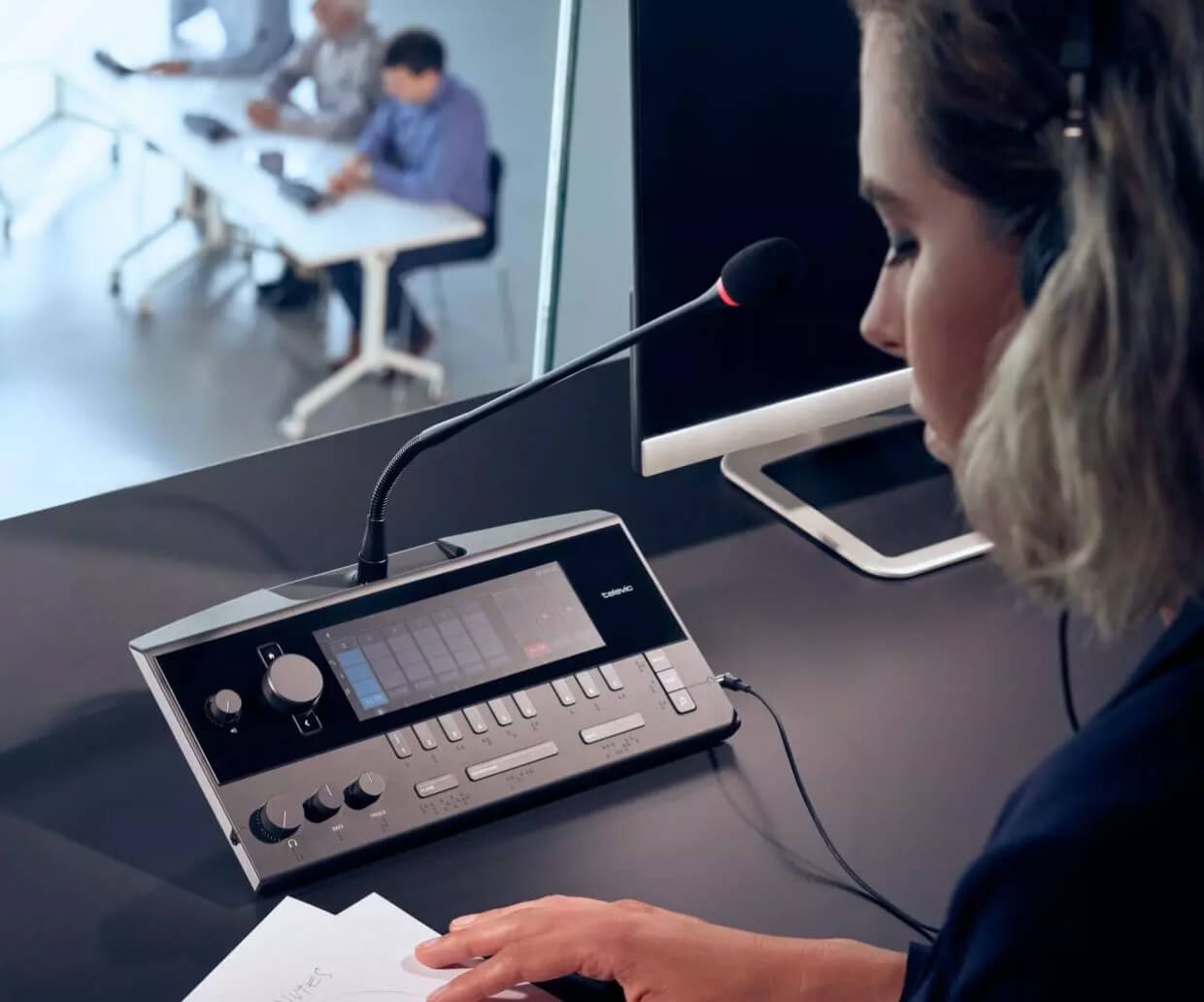
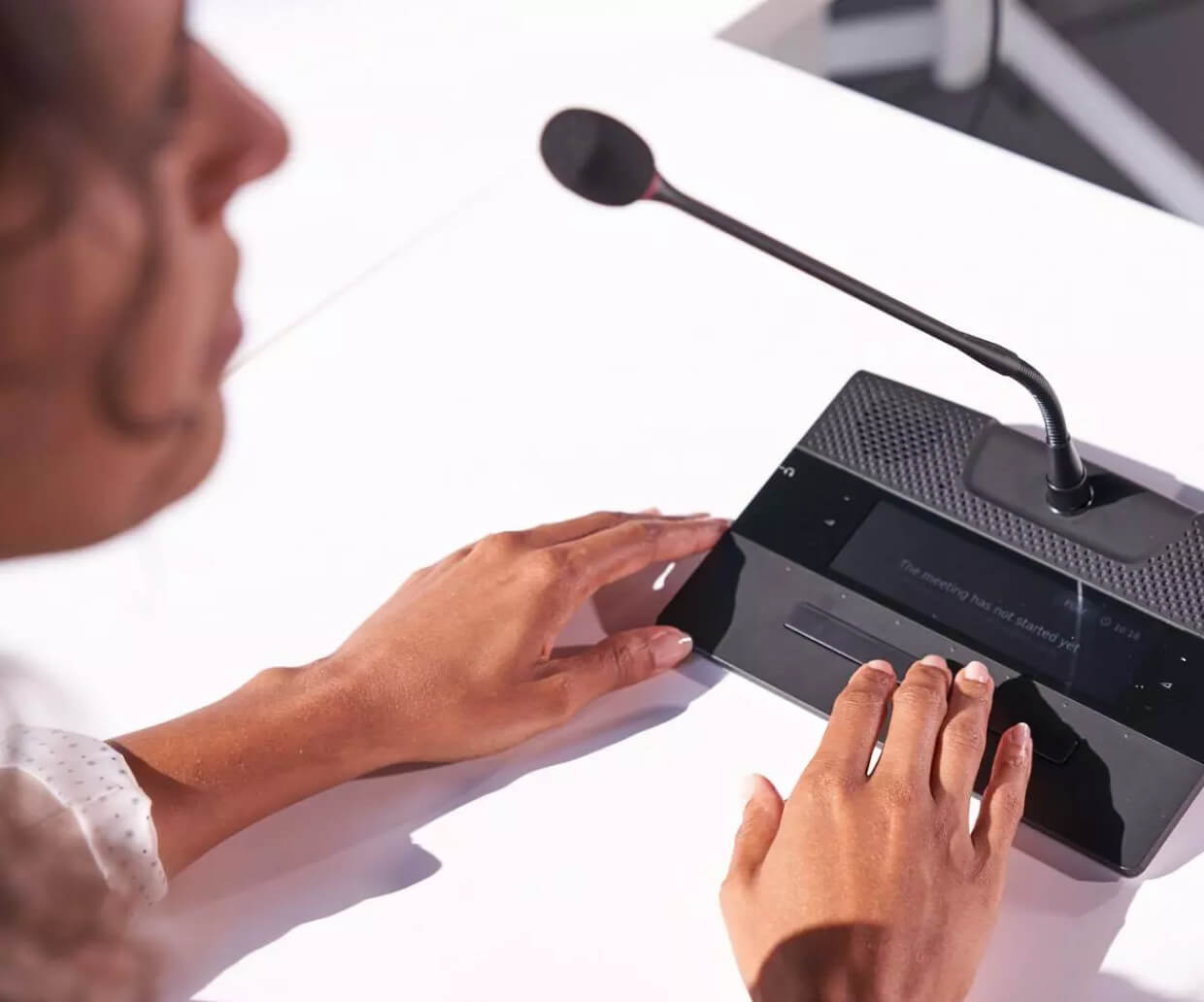
A conference system — also known as a discussion system or delegate microphone system — is an integrated audio and control solution that allows every participant in a formal meeting to speak, be heard, and follow proceedings clearly, regardless of room size or the number of people involved. A conference system typically consists of individual microphone units placed at each participant's seat, a central control unit that manages audio routing and meeting flow, and — in multilingual environments — language interpretation and distribution equipment.
Conference systems are the standard audio infrastructure for boardrooms, government chambers, courtrooms, parliaments, international organisations, and large multilingual congresses, where clear, reliable, and properly managed audio is essential to the integrity of the proceedings — not simply a convenience.
Conference systems are the standard audio infrastructure for boardrooms, government chambers, courtrooms, parliaments, international organisations, and large multilingual congresses, where clear, reliable, and properly managed audio is essential to the integrity of the proceedings — not simply a convenience.
What is the difference between a conference system and a standard meeting room sound system?
A standard meeting room sound system — typical of huddle rooms, small boardrooms, and Microsoft Teams or Zoom Rooms — is generally designed for a small number of participants speaking to a single shared microphone or microphone array, often optimised primarily for video conferencing with a remote audience.
A conference system, or delegate discussion system, is purpose-built for formal, structured meetings where each individual participant has their own dedicated microphone unit and where features such as speaking queue management, voting, delegate identification, and simultaneous interpretation are operationally necessary. The distinction matters because the two technologies solve different problems:
A conference system, or delegate discussion system, is purpose-built for formal, structured meetings where each individual participant has their own dedicated microphone unit and where features such as speaking queue management, voting, delegate identification, and simultaneous interpretation are operationally necessary. The distinction matters because the two technologies solve different problems:
- A meeting room sound system answers: "How do we make sure a video call sounds good for everyone, including remote participants?"
- A conference system answers: "How do we ensure a large, formal, multi-participant meeting is properly heard, structured, recorded, and — where required — interpreted and voted upon?"
Government chambers, parliaments, board meetings of public companies, multilingual congresses, and courtrooms require the structure, control, and audit capability that a true conference system provides — capabilities that standard meeting room audio products are not designed to deliver.
What are the main components of a professional conference system?
A complete conference system typically consists of the following components, working together as an integrated solution:
- Delegate units (discussion units): Individual microphone stations placed at each participant's seat, allowing them to request to speak, be heard clearly through integrated or distributed speakers, and — in advanced units — vote, identify themselves, or select an interpretation language.
- Chairperson unit: A specialised unit, typically with additional controls, allowing the meeting chair to manage the speaking queue, mute or prioritise speakers, and maintain order during debate.
- Central control unit: The system's central processing hub, managing audio routing, microphone activation logic, recording, and integration with other AV systems in the room.
- Interpreter desks and booths (for multilingual meetings): Dedicated equipment allowing professional interpreters to listen to the original speaker and provide real-time simultaneous interpretation, distributed to delegates via their headsets or units.
- Language distribution and headsets: Equipment allowing each delegate to select and listen to their preferred language channel in real time.
- Voting modules: Integrated or standalone components allowing delegates to cast votes electronically, with results tabulated and displayed instantly and securely.
- Management software: Software for configuring the system, managing meeting agendas, recording attendance, logging votes, and producing meeting documentation.
Should I choose a wired or wireless conference system?
The right choice depends on the nature of the venue and how frequently the room configuration changes.
- Wired conference systems connect delegate units via physical cabling to a central processor, offering the most stable, interference-free audio with no risk of signal loss or battery management. For permanent installations — fixed-seating boardrooms, parliamentary chambers, courtrooms, and other venues where the room configuration rarely changes — wired systems remain the gold standard for reliability, particularly in high-security or mission-critical environments where uptime cannot be compromised.
- Wireless conference systems eliminate the need for cabling beneath tables or floors, allowing rooms to be reconfigured quickly for different meeting formats and participant counts. This makes wireless systems particularly well-suited to multi-purpose conference centres, venues hosting varied event types, or institutions that need the flexibility to scale a room's capacity up or down without re-cabling. Modern professional wireless systems — such as Televic's Confidea platform — are engineered specifically to eliminate the interference and reliability concerns historically associated with wireless audio in mission-critical settings.
- Practical guidance: If your venue has one or a small number of fixed, permanently configured meeting spaces — a single boardroom, a dedicated council chamber — a wired system typically offers the best long-term value and reliability. If your venue hosts a variety of meeting formats and sizes, or if you need the flexibility to scale room capacity for different events, a professional wireless system provides meaningfully greater operational flexibility without a meaningful compromise in audio quality when sourced from an established manufacturer.
Can a conference system support hybrid meetings with remote participants?
Yes. Modern conference systems are designed to integrate with video conferencing infrastructure, allowing remote participants to join formal proceedings alongside those physically present in the room. Televic's T-CAM camera tracking technology, for example, automatically frames the active speaker for the benefit of remote participants, ensuring the hybrid meeting experience reflects the clarity and structure of an in-person formal meeting rather than a standard video call.
For institutions that increasingly host hybrid board meetings, committee sessions, or international engagements with some participants joining remotely, specifying a conference system with proper hybrid integration from the outset avoids the compromises that come from retrofitting video capability onto a system not originally designed for it.
For institutions that increasingly host hybrid board meetings, committee sessions, or international engagements with some participants joining remotely, specifying a conference system with proper hybrid integration from the outset avoids the compromises that come from retrofitting video capability onto a system not originally designed for it.
Can a conference system integrate with our existing AV control system?
Yes. Professional conference systems are designed to integrate with leading audio-visual control platforms, allowing the conference system to function as part of a broader, centrally managed room control ecosystem rather than as an isolated system requiring separate operation.
This is particularly valuable for institutions with existing audio-visual control infrastructure across multiple rooms, where a unified control approach simplifies operation for facilities and IT staff and ensures a consistent user experience for meeting chairs and operators across different venues.
This is particularly valuable for institutions with existing audio-visual control infrastructure across multiple rooms, where a unified control approach simplifies operation for facilities and IT staff and ensures a consistent user experience for meeting chairs and operators across different venues.
Installation, Service, and Warranty
Is delivery and installation included in the quotation?
Yes, delivery and installation are included in the quotation unless otherwise stated.
Do you have in-house technicians for installation, servicing, and support?
Yes, we have in-house technicians who handle installation, servicing, and technical support.
Having in-house service capability means that when a maintenance issue arises, the same team that installed your system is the team that comes to resolve it — with direct knowledge of your specific installation, its configuration, and its history.
Having in-house service capability means that when a maintenance issue arises, the same team that installed your system is the team that comes to resolve it — with direct knowledge of your specific installation, its configuration, and its history.


