







Why Work With Us
Why choose The Brain Computer Corporation over other digital signage suppliers?

The Brain Computer Corporation has been delivering AV solutions in the Philippines for over 38 years — making us one of the longest-established audio-visual integration companies in the country. This longevity is not incidental. It reflects a track record of completed projects across retail, corporate, hospitality, education, healthcare, and government sectors; deep relationships with leading hardware manufacturers and technology partners; and a technical team with expertise that takes years of real-world installation experience to develop.
When you work with The Brain Computer Corporation, you are not buying a screen from a supplier. You are engaging a technical partner who will assess your space, specify the right solution for your context, install it to a professional standard, and support it for the life of the asset.
When you work with The Brain Computer Corporation, you are not buying a screen from a supplier. You are engaging a technical partner who will assess your space, specify the right solution for your context, install it to a professional standard, and support it for the life of the asset.
Who are some of The Brain Computer Corporation’s trusted clients?
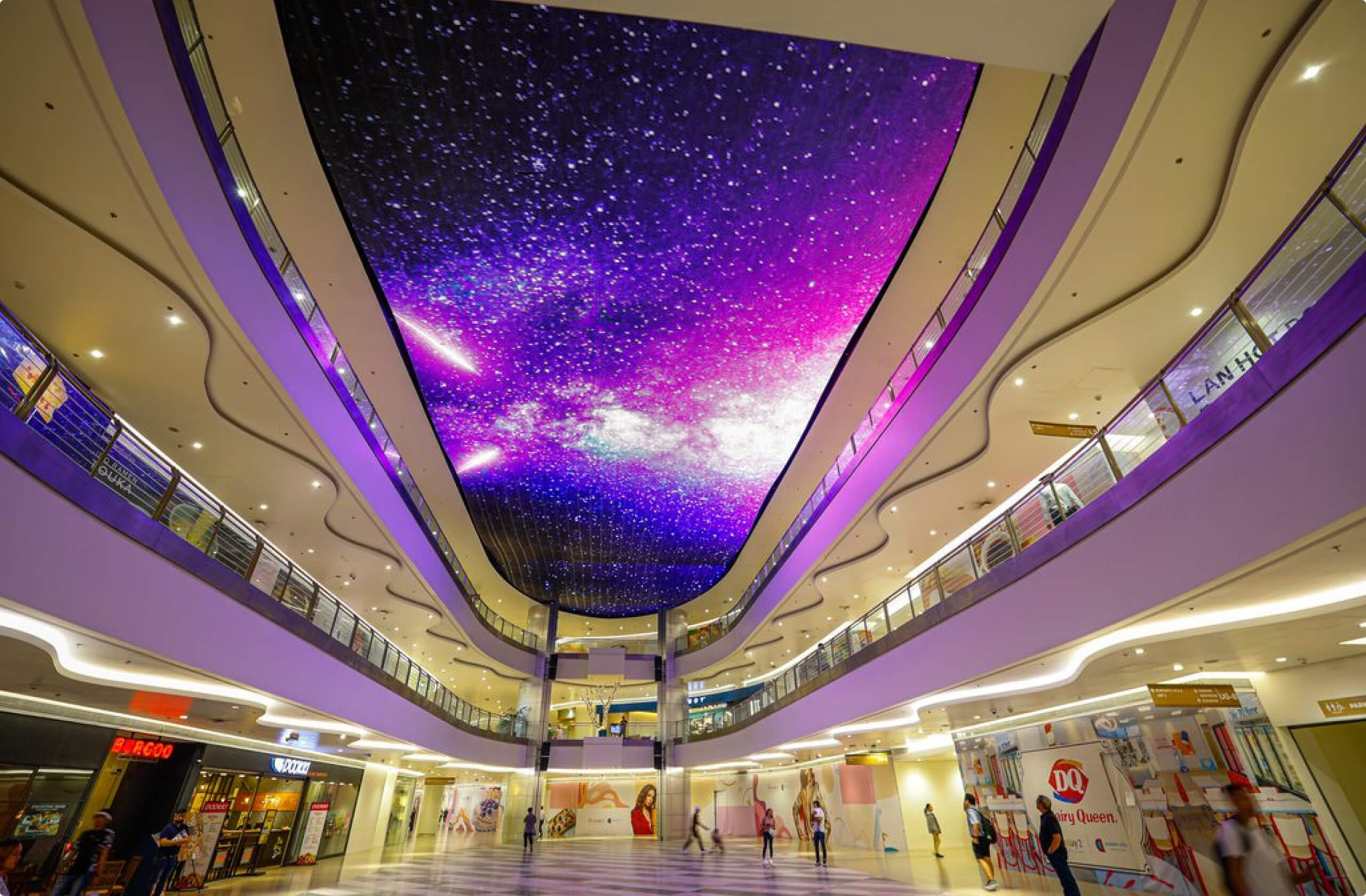
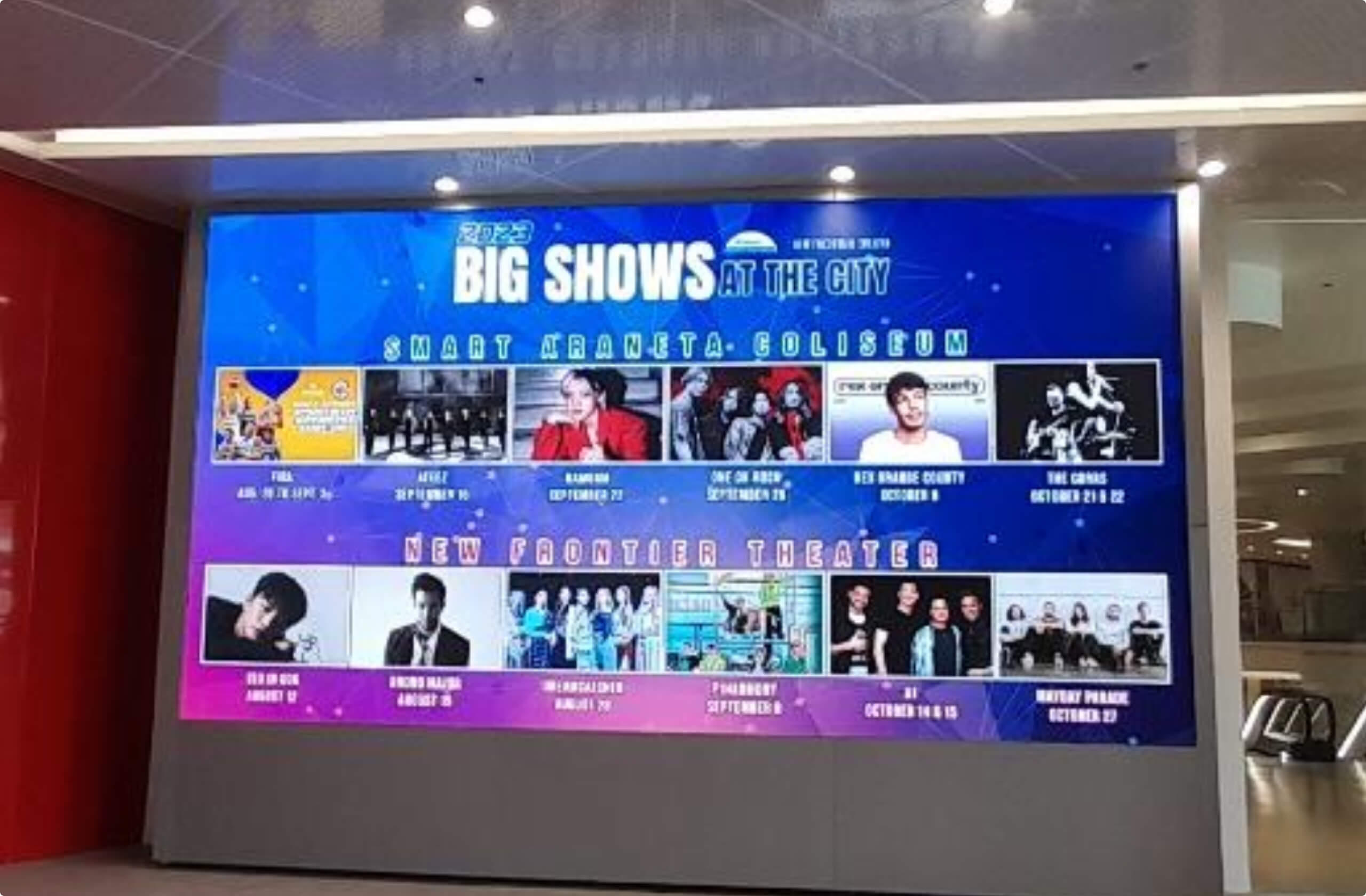
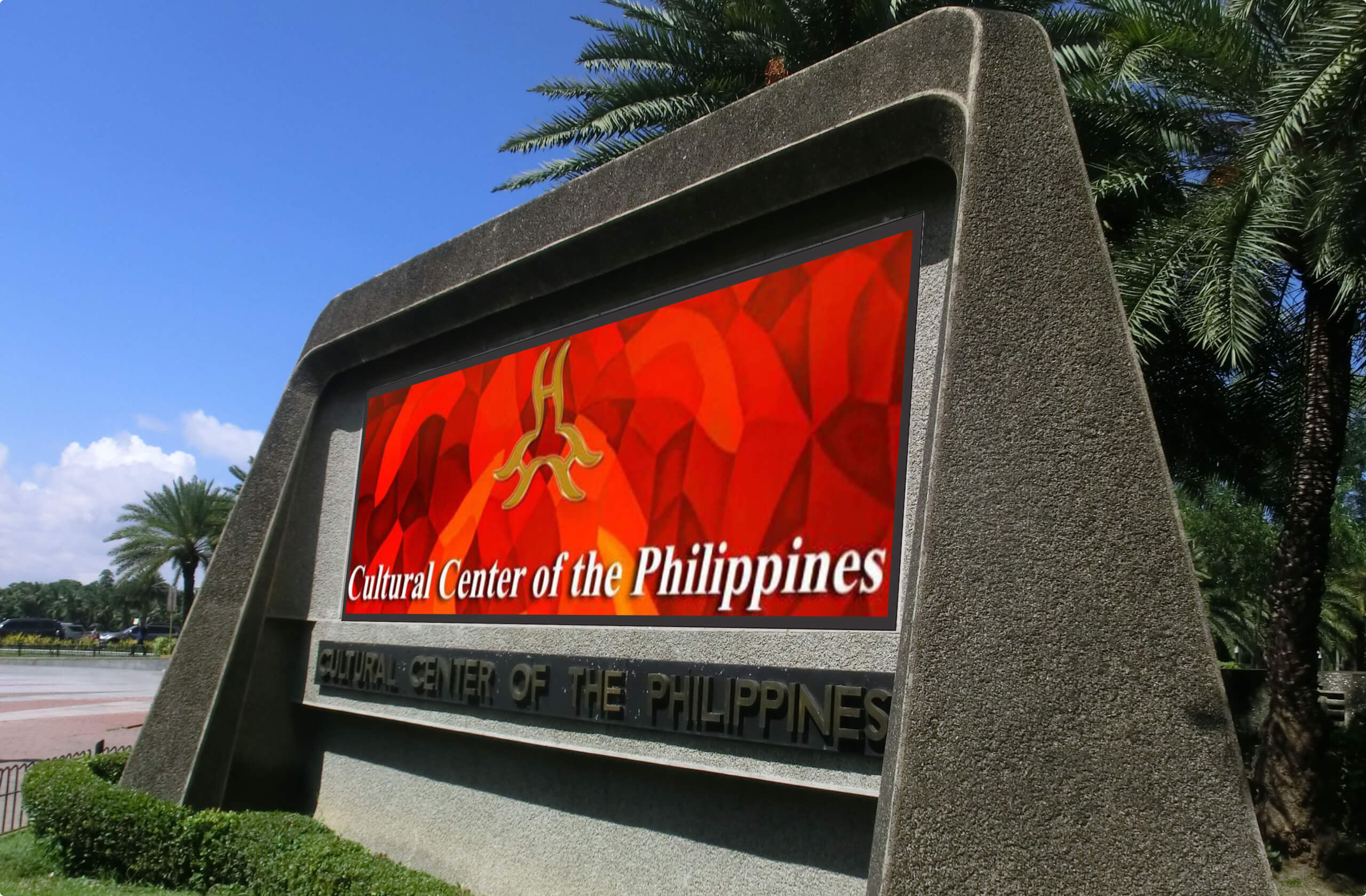
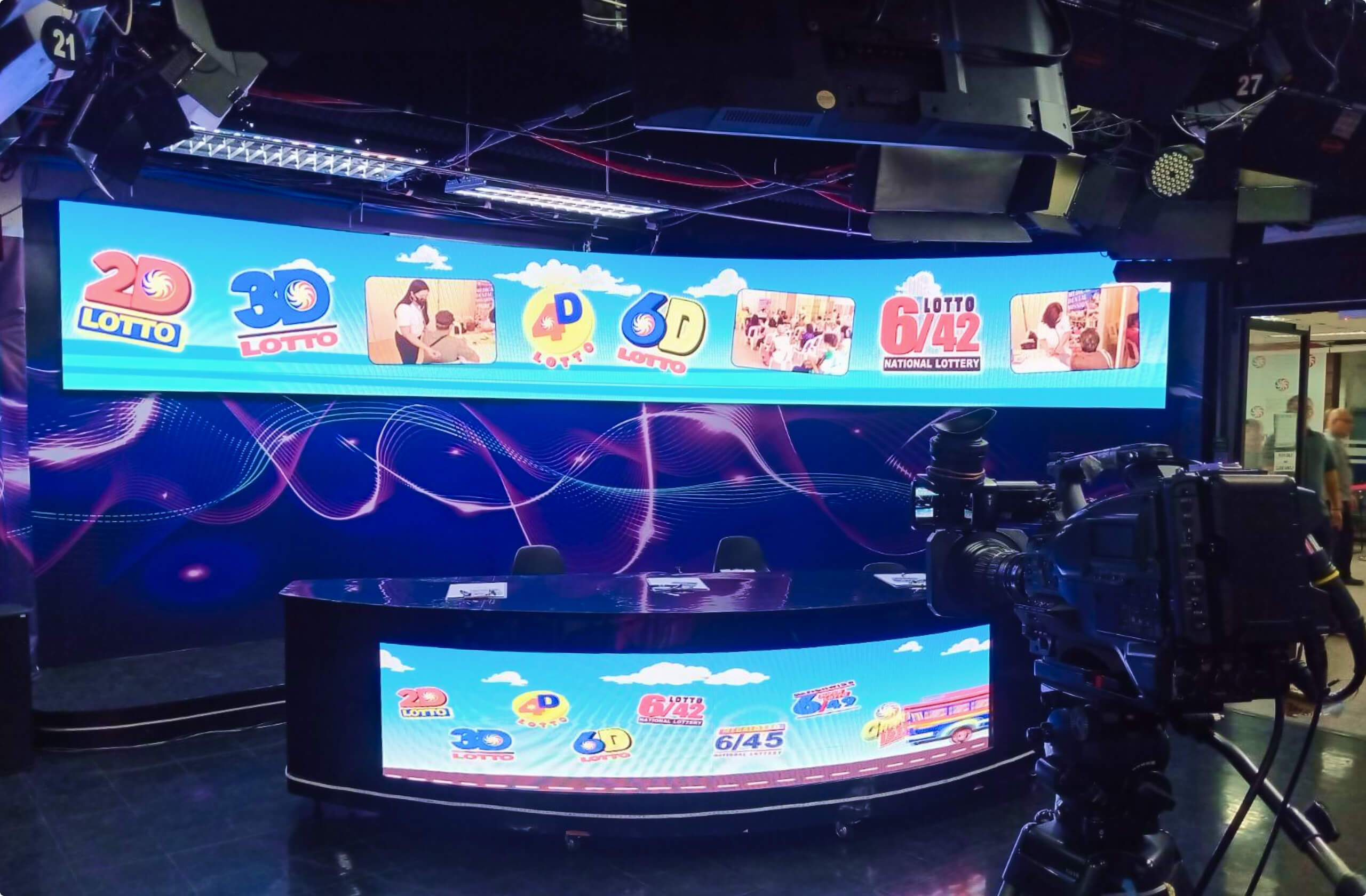
The Brain Computer Corporation has worked with a wide range of clients, including Gateway Mall, Ayala Malls Circuit, Smart Araneta Coliseum, Novotel, ABS-CBN, Giordano, PAGCOR, and the Cultural Center of the Philippines, among many others.
Do you serve clients outside of Metro Manila?
Yes. The Brain Computer Corporation serves clients across the Philippines, including key commercial centres in Cebu, Davao, Iloilo, Bacolod, Cavite, La Union, Bataan and other provincial and regional locations.
For projects outside Metro Manila, our team coordinates site visits, installation schedules, and after-sales support based on each project's specific location and requirements. Contact us to discuss your project location and we will advise on timelines and logistics.
For projects outside Metro Manila, our team coordinates site visits, installation schedules, and after-sales support based on each project's specific location and requirements. Contact us to discuss your project location and we will advise on timelines and logistics.
All About Digital Signages
What is a digital signage?
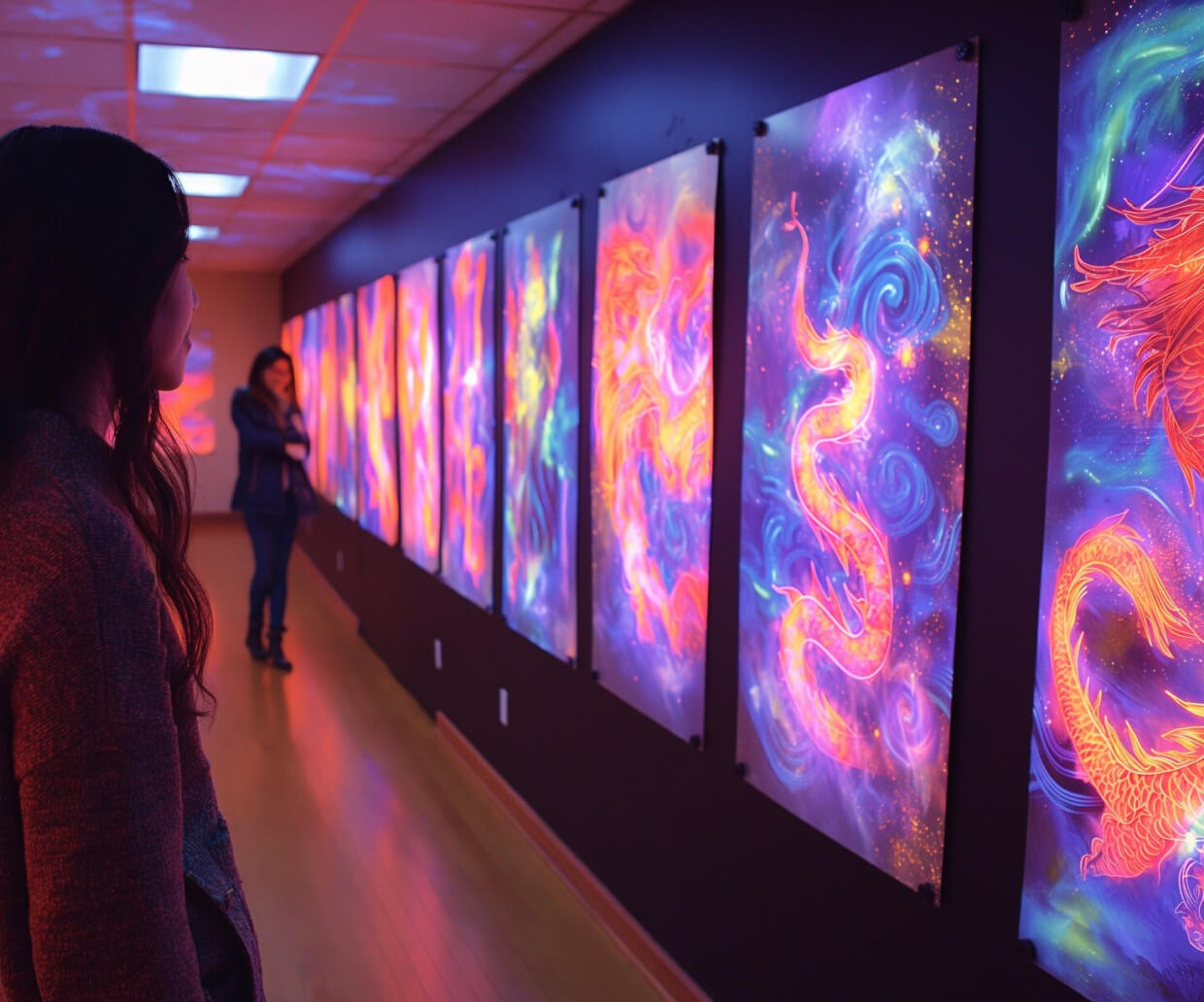
Digital signage is a network of electronic display screens — including LED panels, LCD screens, video walls, interactive kiosks, and digital menu boards — used to deliver dynamic visual content such as advertisements, product promotions, wayfinding information, announcements, and brand messaging to a targeted audience in a specific physical location.
Unlike traditional printed signage, digital signage allows content to be updated instantly and remotely, scheduled by time of day or audience, and personalised based on real-time data such as weather, inventory, or audience demographics. It is used across retail stores, corporate offices, hotels, restaurants, hospitals, schools, airports, shopping malls, and government facilities.
Digital signage systems consist of three core components: the display hardware (the screen itself), the media player or playback device, and the content management system (CMS) — the software platform through which content is created, scheduled, and managed.
Unlike traditional printed signage, digital signage allows content to be updated instantly and remotely, scheduled by time of day or audience, and personalised based on real-time data such as weather, inventory, or audience demographics. It is used across retail stores, corporate offices, hotels, restaurants, hospitals, schools, airports, shopping malls, and government facilities.
Digital signage systems consist of three core components: the display hardware (the screen itself), the media player or playback device, and the content management system (CMS) — the software platform through which content is created, scheduled, and managed.
Is it safe to install LED screens outdoors in the Philippines?
Digital signage is the broader category — it refers to any electronically controlled display used to communicate with an audience in a commercial or public environment. LED walls are one type of display technology used within that category.
The distinction matters for buyers because the terms are sometimes used interchangeably but describe different things:
The distinction matters for buyers because the terms are sometimes used interchangeably but describe different things:
- Digital signage refers to the complete system: display hardware, media player, content management software, and the content itself. The display could be an LCD screen, a LED panel, a video wall, a touchscreen kiosk, or an e-paper display.
- An LED wall is a specific display technology — a large-format seamless screen built from modular LED panels — that is often used as the hardware component within a digital signage deployment.
In practice, a retail digital signage network might include LED window displays, LCD screens in aisles, interactive touchscreen kiosks near product zones, and a digital menu board at the checkout — all managed from a single content management system. The Brain Computer Corporation designs and integrates all of these components as part of a unified digital signage solution.
What types of digital signage are available?
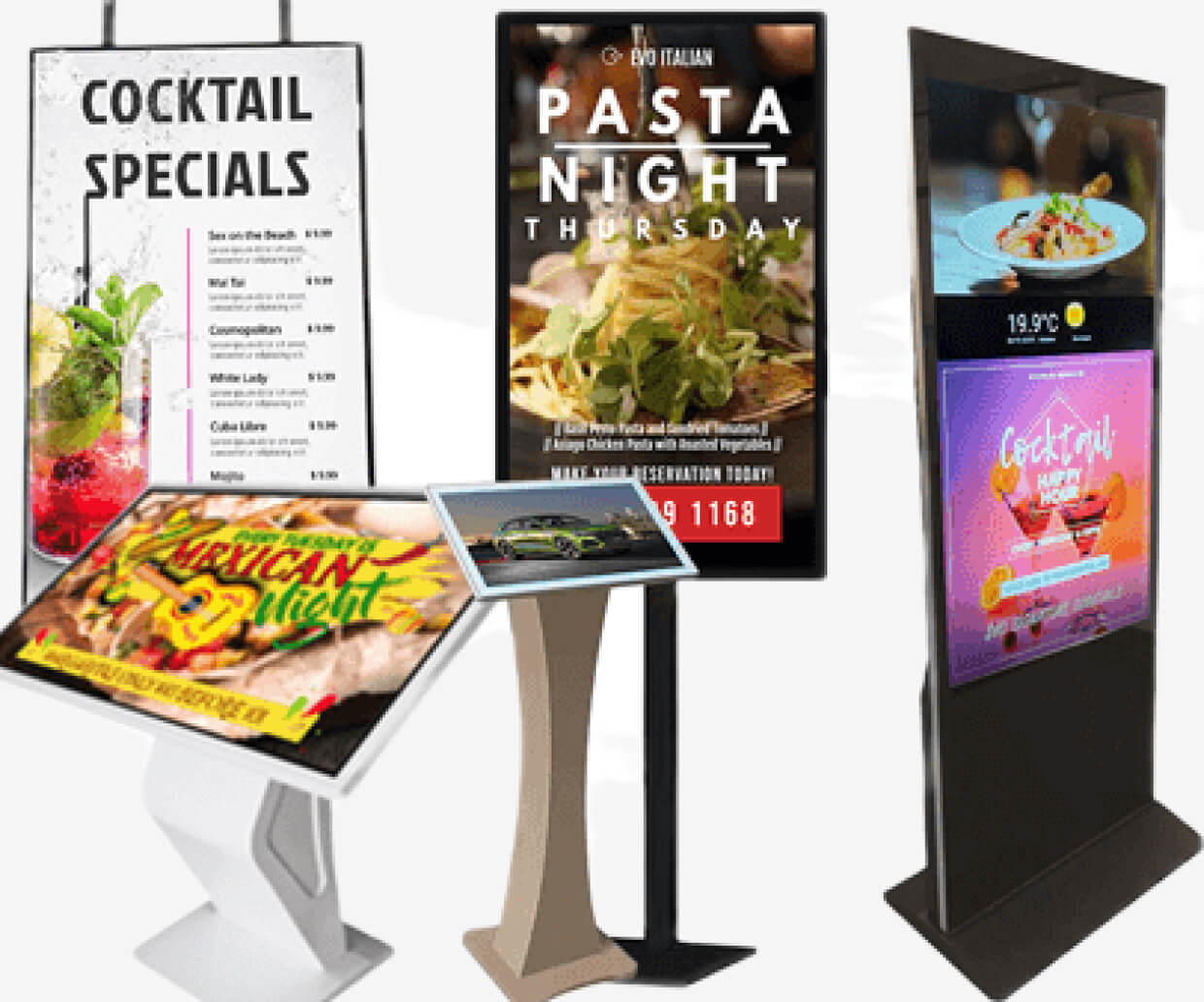
Digital signage is available in a wide range of hardware formats, each suited to specific deployment contexts:
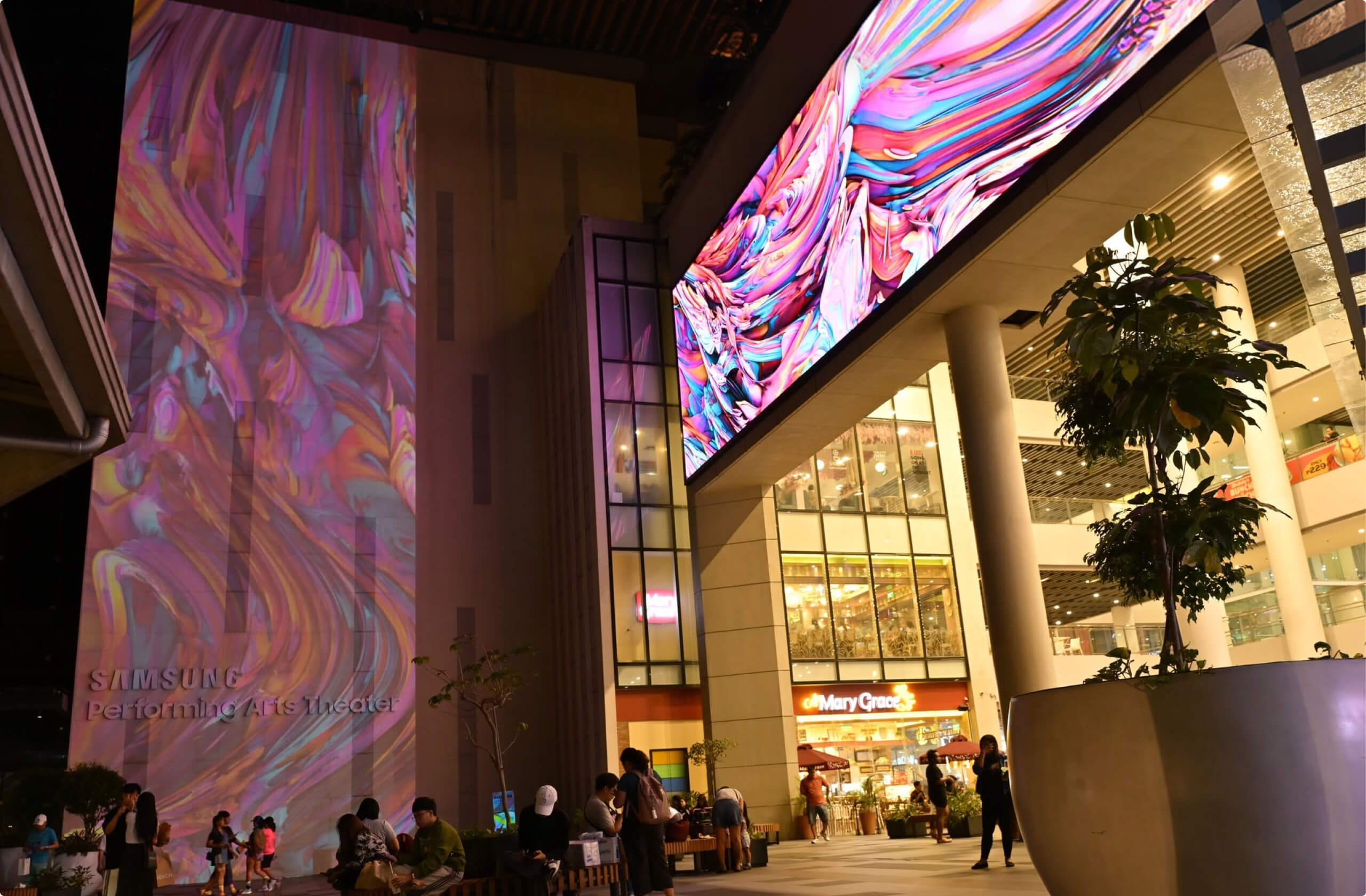
- LED video walls: Large-format seamless displays built from modular panels. Best for high-impact brand installations, shopfront windows, corporate lobbies, event stages, and outdoor advertising.
- LCD commercial displays: Single-screen or multi-screen commercial-grade panels for retail shelves, corridor displays, meeting rooms, and standard signage applications. More cost-effective than LED for smaller formats.
- Interactive touchscreen kiosks: Self-service terminals for wayfinding, product lookup, queue management, and customer service applications. Common in malls, hospitals, government offices, and transport hubs.
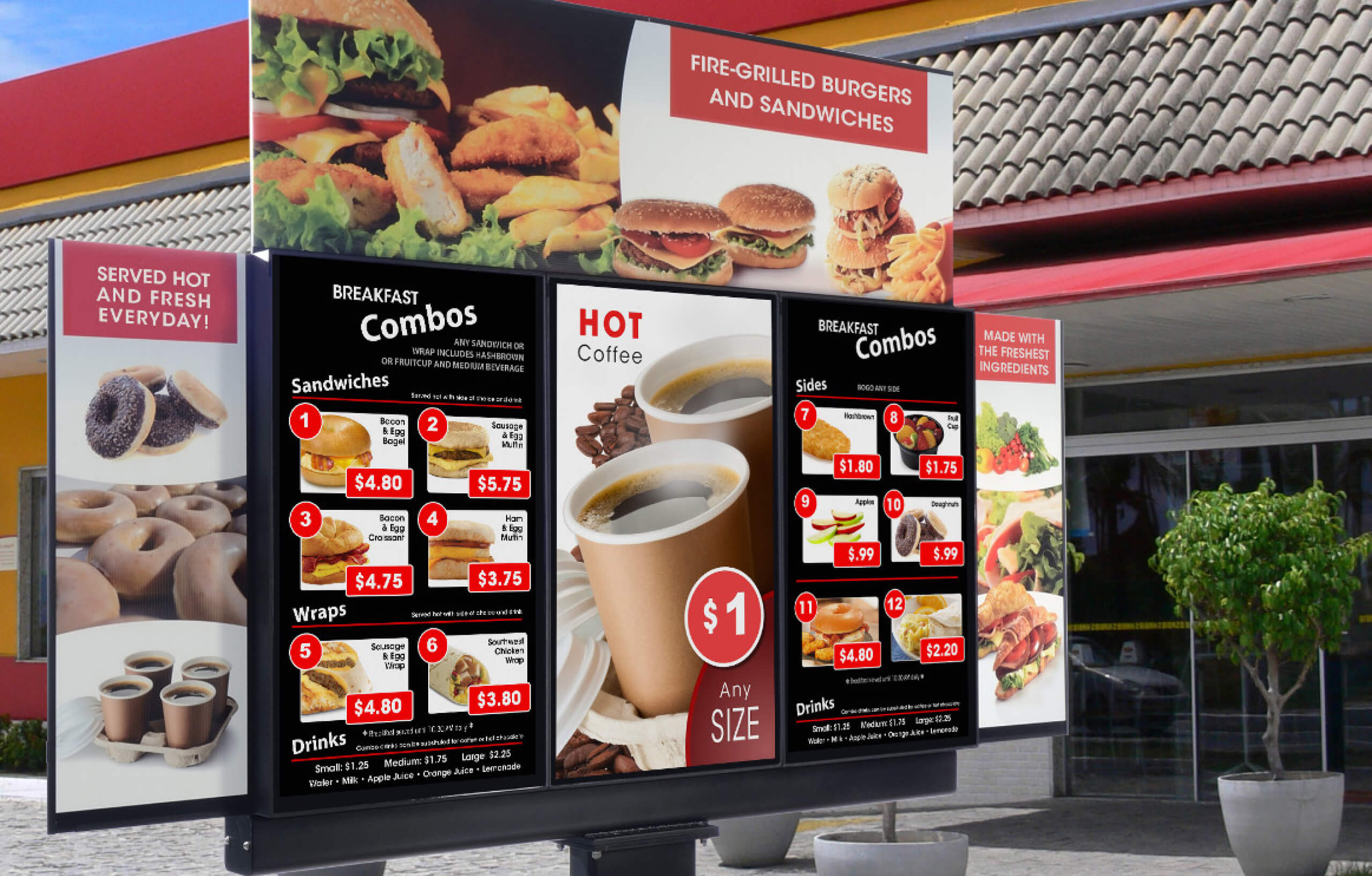
- Digital menu boards: Purpose-built displays for QSR (quick-service restaurants), cafeterias, and F&B establishments. Typically ceiling-mounted and optimised for readability at distance.
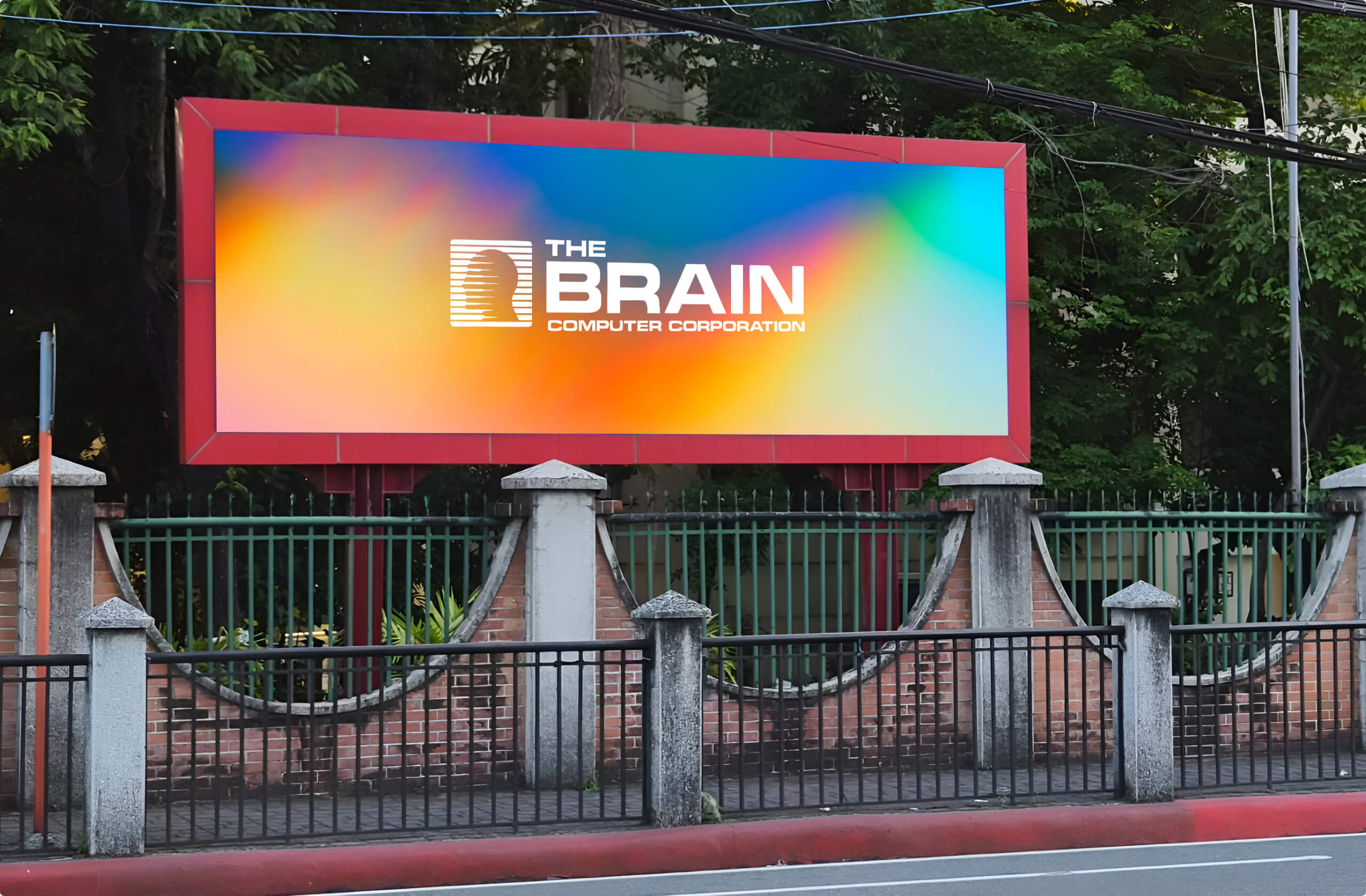
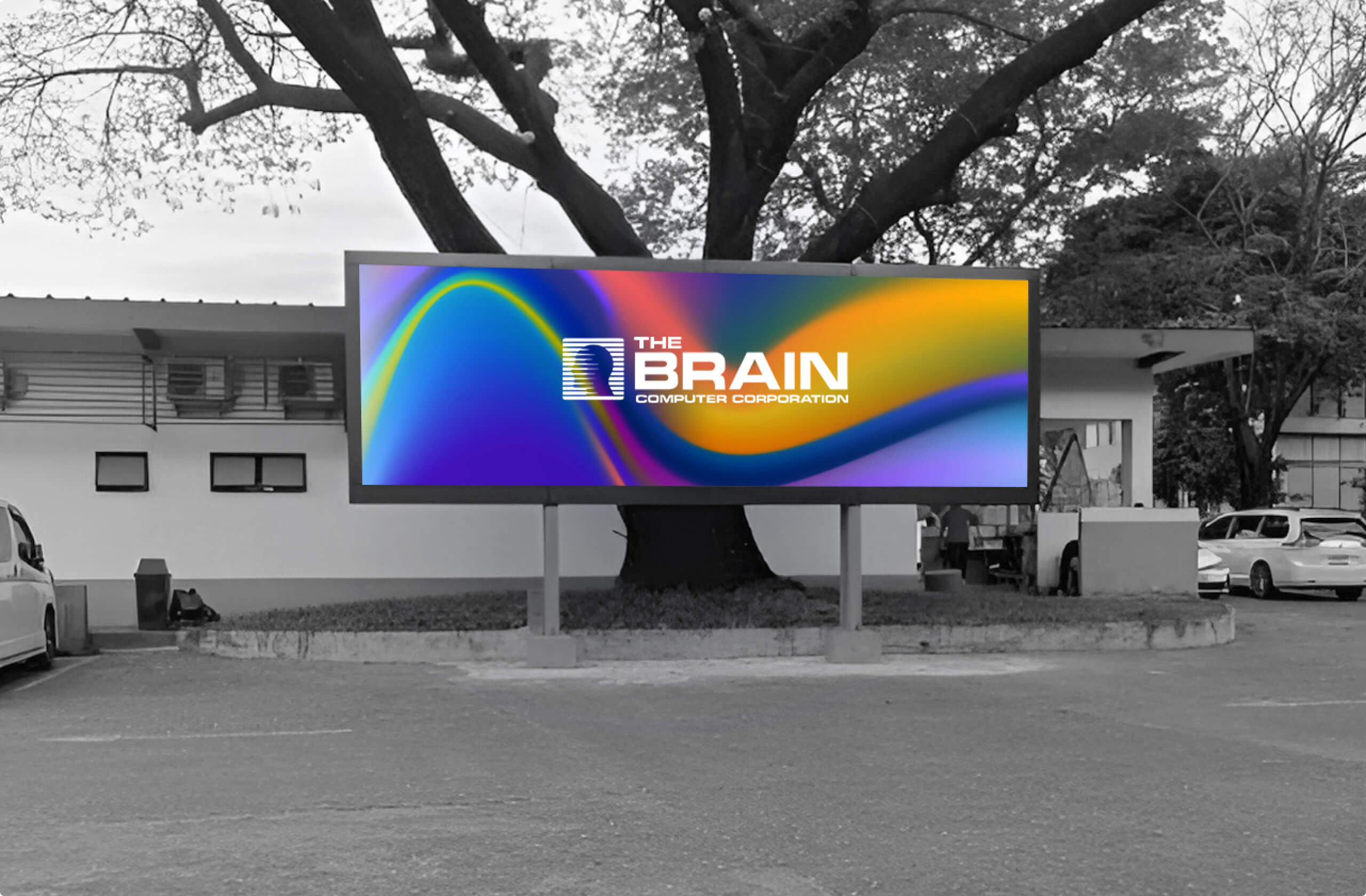
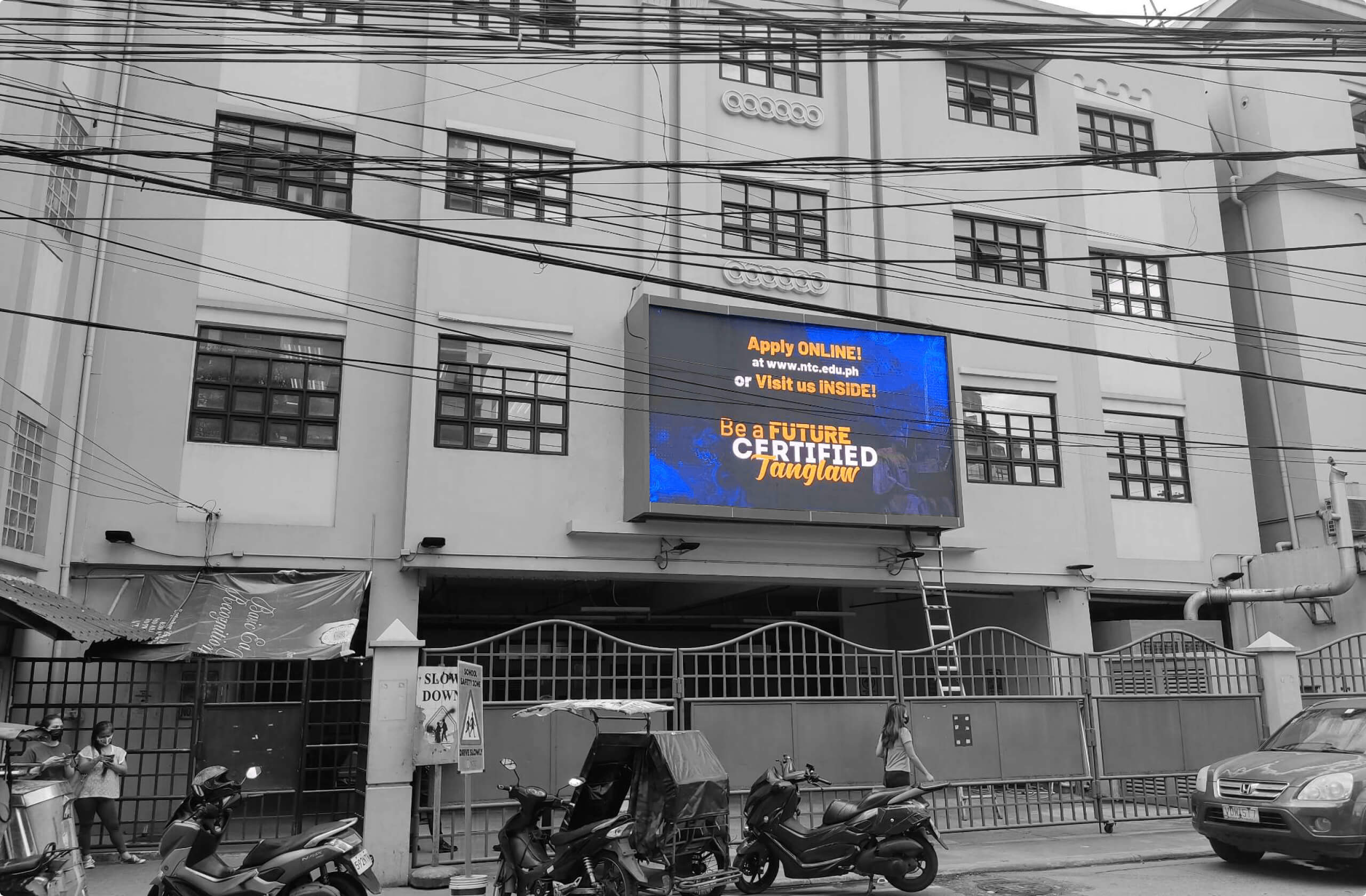
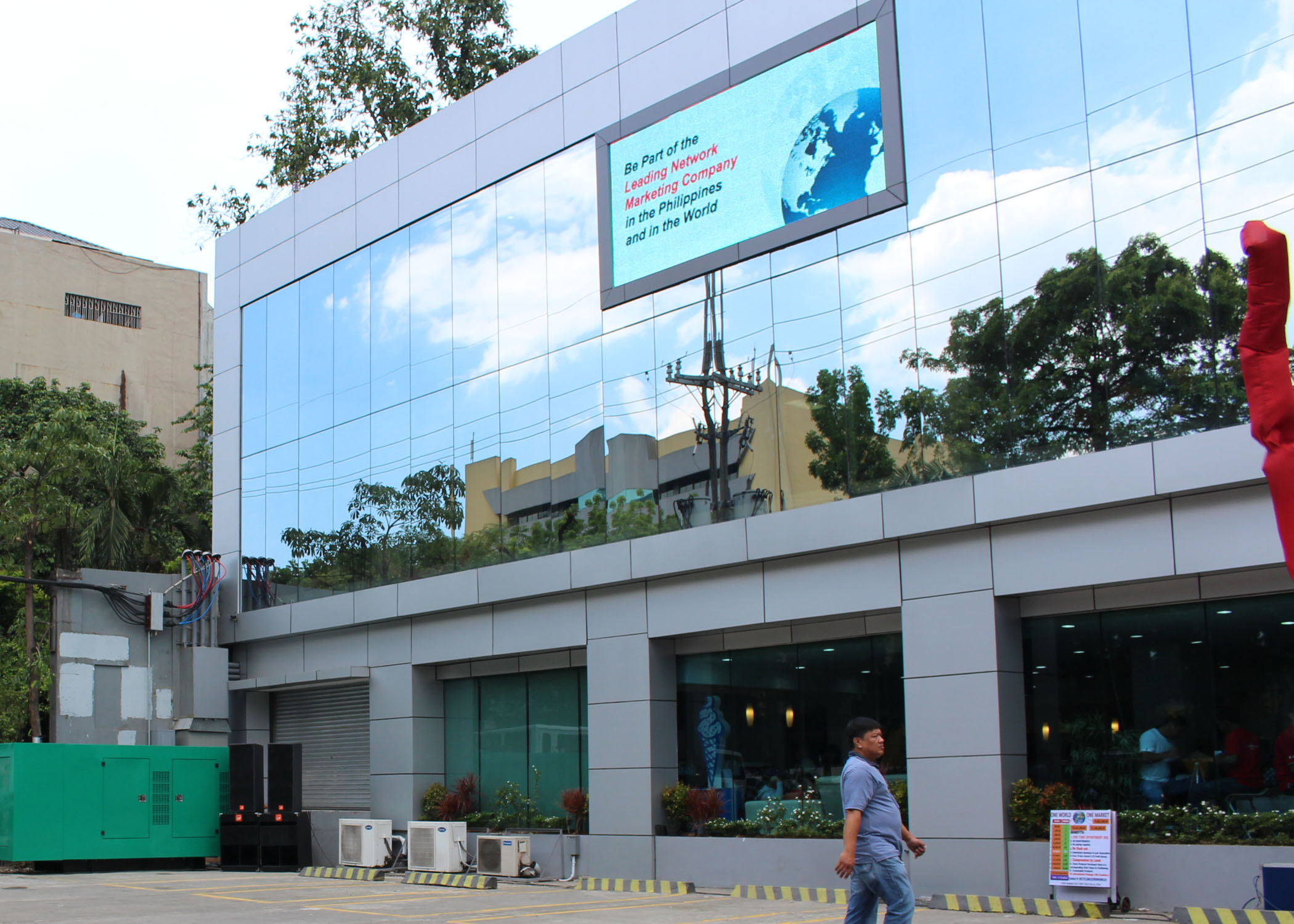
- Outdoor digital signage: Weatherproofed, high-brightness displays for building facades, transport terminals, outdoor retail areas, and roadside advertising.
- Window-facing displays: High-brightness panels designed for shopfront windows, visible from outside the store during daylight hours.
- Corporate communication displays: Screens deployed in office lobbies, corridors, canteens, and common areas for internal communications, KPI dashboards, and employee engagement content.
What industries use digital signage in the Philippines?
Digital signage is deployed across virtually every commercial sector in the Philippines. The most active markets are:
- Retail: Shopping malls, fashion brands, supermarkets, pharmacies, electronics stores, and automotive showrooms use digital signage for product promotion, in-store navigation, campaign launches, and brand storytelling.
- Food and beverage: Quick service restaurant (QSR) chains, sit-down restaurants, coffee shops, and cafeterias use digital menu boards to display menus, highlight promotions, and manage daypart content — automatically switching morning and evening menus at scheduled times.
- Corporate and BPO: Philippine BPO campuses, corporate headquarters, and multi-floor office buildings use digital signage for lobby branding, visitor information, employee communications, KPI dashboards, and internal announcements.
- Hospitality: Hotels, resorts, and function venues use digital signage for guest wayfinding, event schedules, F&B promotions, and branded lobby experiences.
- Healthcare: Hospitals and clinics deploy digital signage for patient queue management, wayfinding, health information, and appointment notifications.
- Education: Universities and schools use digital displays for campus wayfinding, event promotion, student announcements, and emergency communications.
- Government: National agencies, LGUs, and transport authorities deploy digital signage for public information, queue management, wayfinding, and citizen service communications.
- Transportation: Airports, bus terminals, and seaports use digital signage for real-time departure and arrival information, wayfinding, advertising, and emergency notifications.
What is the difference between portrait and landscape digital signage?
Portrait orientation (vertical, taller than it is wide) and landscape orientation (horizontal, wider than it is tall) serve different content types and physical environments.
Portrait digital signage is well-suited to:
Portrait digital signage is well-suited to:
- Retail aisle displays and gondola-end screens where vertical space is available
- Wayfinding totems and freestanding kiosks
- Window-facing displays in narrow shopfronts
- Checkout and queue area screens
- Corporate lift lobby displays
Landscape digital signage is appropriate for:
- Video playback and brand content
- Digital menu boards viewed from below
- Boardroom and meeting room displays
- Horizontally-oriented feature walls
Installation, Service, and Warranty
Is delivery and installation included in the quotation?
Yes, delivery and installation are included in the quotation unless otherwise stated.
Do you have in-house technicians for installation, servicing, and support?
Yes, we have in-house technicians who handle installation, servicing, and technical support.
Having in-house service capability means that when a maintenance issue arises, the same team that installed your system is the team that comes to resolve it — with direct knowledge of your specific installation, its configuration, and its history.
Having in-house service capability means that when a maintenance issue arises, the same team that installed your system is the team that comes to resolve it — with direct knowledge of your specific installation, its configuration, and its history.


