June 17, 2026
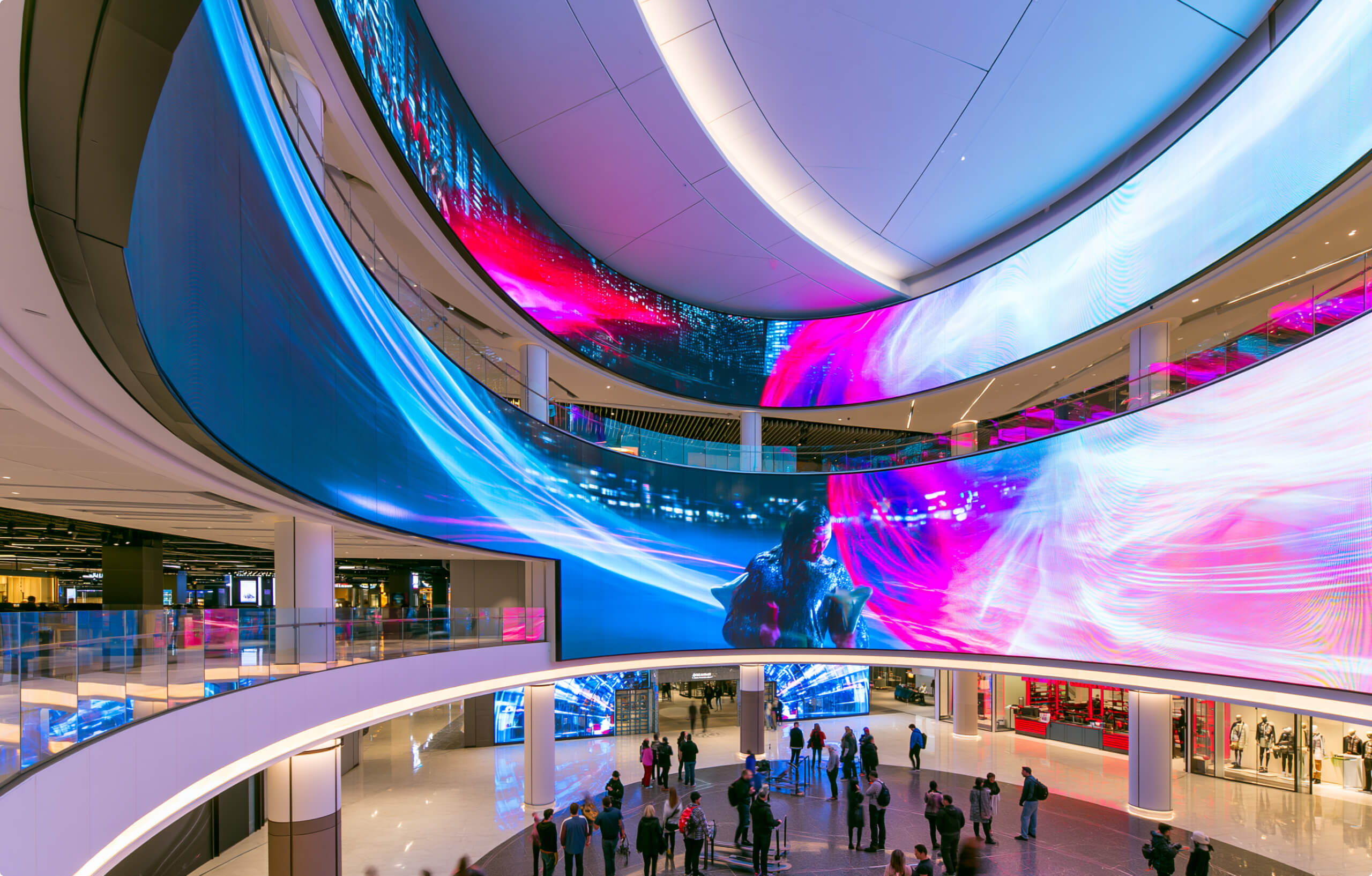
An indoor LED wall is one of the most commercially powerful investments a retail brand can make. Done well, it creates an immediate, visceral impression — in-store, in-window, on social media — that no other display technology currently matches for scale, vibrancy, and visual authority. Done poorly, or specified without sufficient depth, it becomes an expensive screen that underperforms, requires frequent maintenance, or simply does not look the way anyone expected when the content goes live.
The gap between these two outcomes is almost always created at the specification stage. Not in the choice of manufacturer, and not in the quality of installation. In the seven or eight technical decisions that determine whether a display is genuinely fit for purpose in the specific retail context it is being asked to serve.
This guide is written for Marketing Managers, Retail Operations teams, Procurement Officers, and Architects involved in specifying indoor LED walls for retail environments. It covers every material specification variable — from pixel pitch and LED packaging technology through to brightness, serviceability, structural requirements, and content management — and explains what each decision means for performance, cost, and operational longevity.
Retail is a demanding deployment environment for indoor LED. Unlike a control room or a corporate lobby — where viewers are seated at a consistent distance, lighting conditions are stable, and content tends to be static or slow-moving — retail environments place unique stresses on both hardware and visual performance.
Customers move. Viewing distances vary from less than a metre for someone examining product imagery up close, to six or more metres for someone across the floor. Ambient lighting changes throughout the day and differs significantly between the entrance zone, the aisle, and the checkout area. Retail content tends to be high-motion — brand films, product reels, promotional transitions — which places demands on refresh rate and motion handling that a meeting room display simply does not face.
And unlike most corporate installations, a retail LED wall is a direct brand communication tool. If the image quality is inconsistent, if the colour temperature shifts across the wall surface, or if the content flickers on a customer's phone camera when they are filming in-store, the display damages the brand impression it was intended to reinforce. The specification must account for all of this.
Pixel pitch is the first and most commercially consequential specification decision in any indoor LED wall project. It determines image sharpness at close range, sets the upper boundary of what your content can visually achieve, and — because it is the primary cost driver — shapes the entire project budget.
Pixel pitch refers to the distance in millimetres between the centre points of adjacent LED pixels. A P1.5 display has a 1.5mm gap between pixels; a P2.5 display has a 2.5mm gap. The smaller the pitch, the more pixels per square metre, and the sharper the image at close viewing distances. The formula that governs specification is consistent across the industry:
Minimum comfortable viewing distance (metres) ≈ pixel pitch (mm) × 2.5
This means a P2.5 display is optimally viewed from approximately 6.25 metres. A P1.5 display from 3.75 metres. A P1.9 from approximately 4.75 metres.
For retail, the practical implication is this: measure the actual distance between your primary display and the position where the majority of your customers will be when they look at the screen. That measurement, run through the formula above, gives you the upper pixel pitch limit that will appear seamless at that distance.
The most common retail indoor pitch ranges break down by use case as follows:
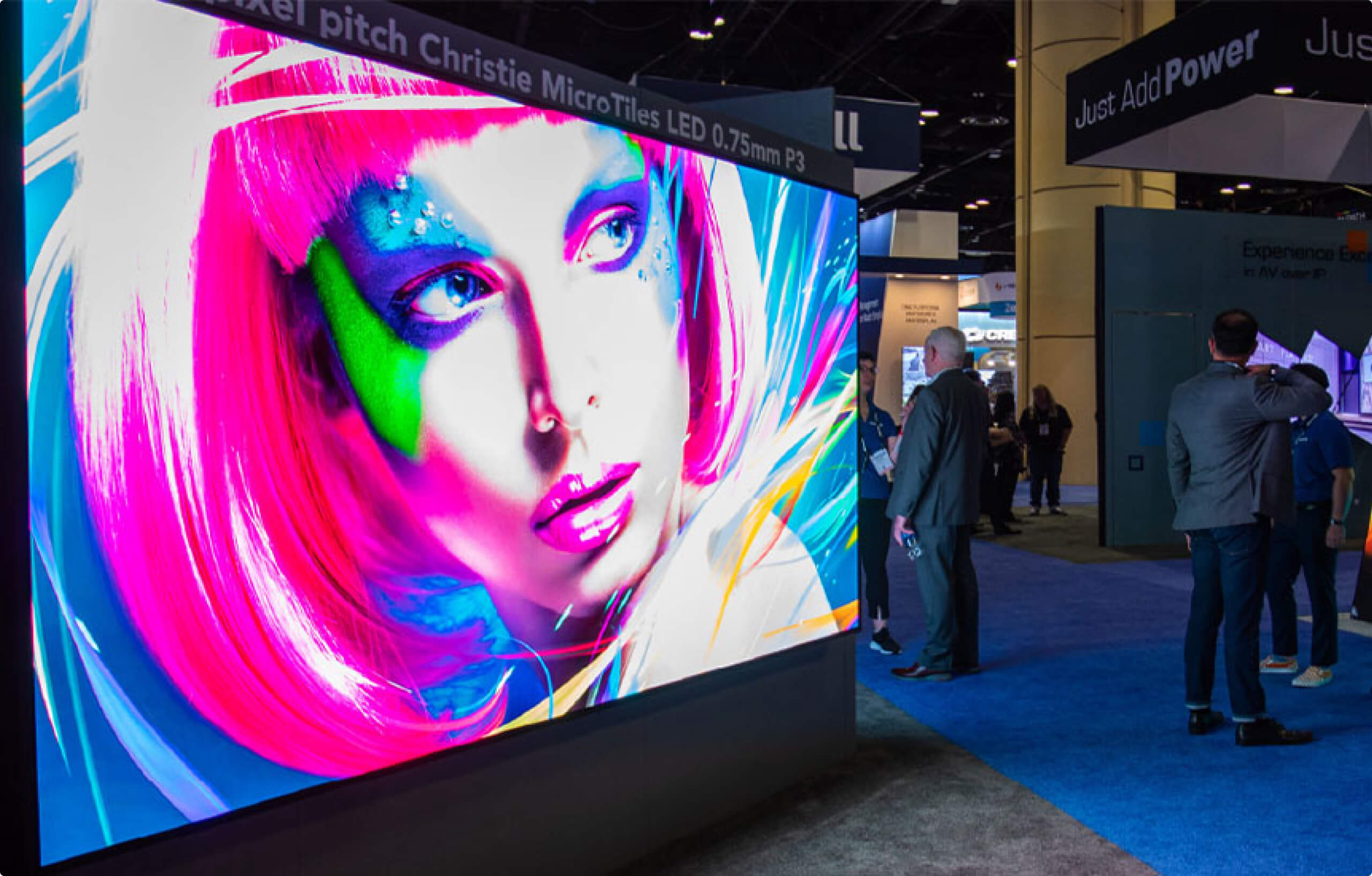
P1.2 to P1.5: Ultra-fine pitch, appropriate for premium product zones, luxury retail displays, or installations where customers will stand within two to three metres of the screen. This range commands the highest cost per square metre and is typically reserved for flagship applications where brand perception is the primary investment driver.
P1.5 to P2.0: The standard range for in-store feature walls in fashion, electronics, and lifestyle retail, where customers may browse within two to four metres of the display. Delivers excellent image quality for product imagery, video content, and mixed text-visual campaigns at a meaningfully lower cost than ultra-fine pitch options.
P2.0 to P2.5: Appropriate for displays in deeper retail environments, larger format stores, or installations where the primary viewing distance is consistently four to six metres. This range is common in retail common areas, food courts, and category zone walls in larger format retail.
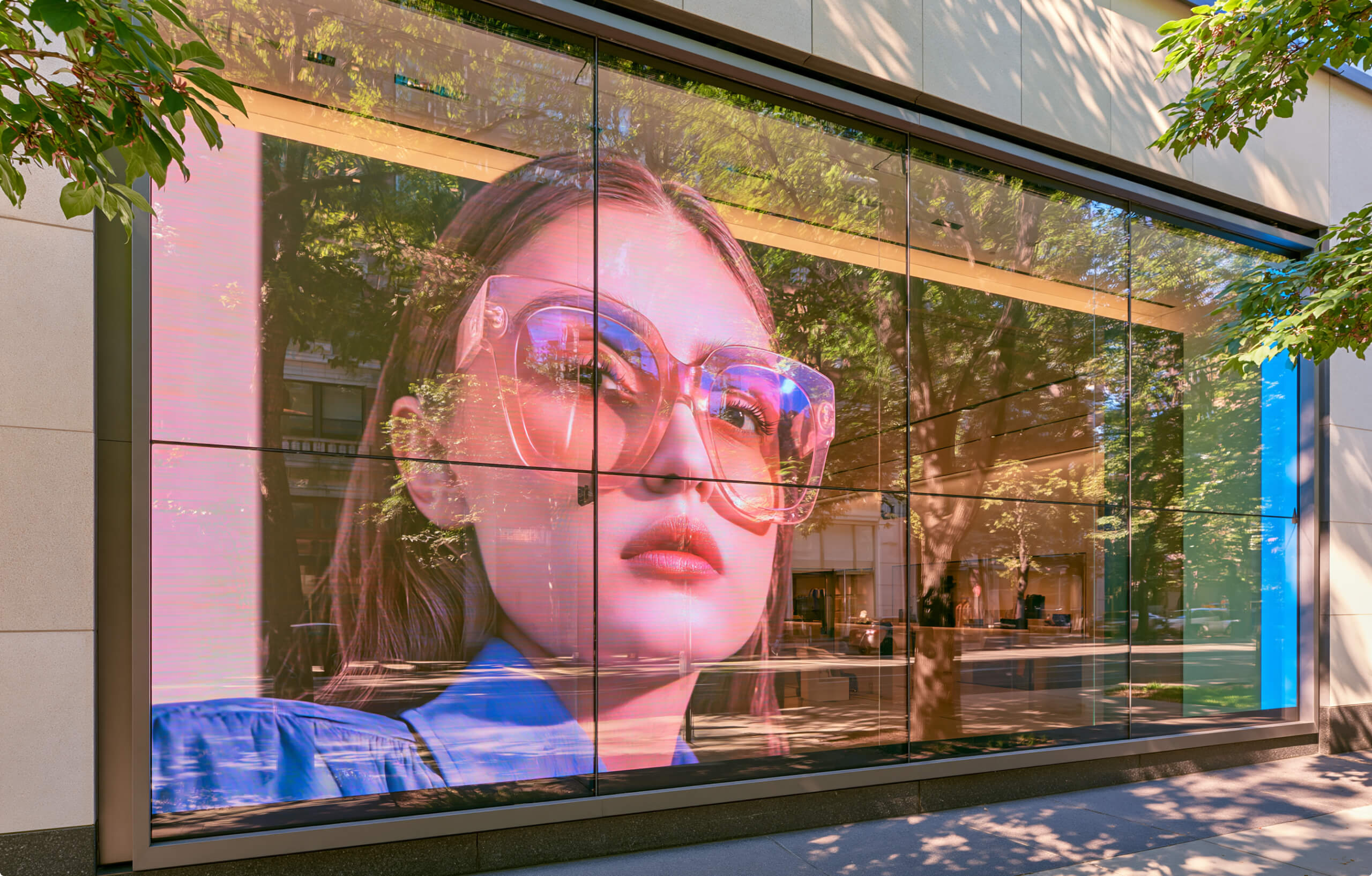
P2.5 to P3.9: The appropriate range for shopfront window displays and semi-enclosed entrance zones where both pedestrian viewers outside the store and customers at the entrance are at greater distances. This range also requires significantly higher brightness than interior displays — a separate specification decision covered below.
The cost differential across these ranges is material. Fine-pitch displays at P1.2 can cost 30–40% more per square metre than a comparable P2.5 display, and the premium for ultra-fine COB technology at P1.0 or below is steeper still. Over-specifying pitch beyond what your actual viewing geometry requires is one of the most common and most avoidable budget inefficiencies in retail LED projects.
Pixel pitch describes the geometry of the display. LED packaging technology describes the physical construction of each pixel — and this is a specification variable that has changed significantly in recent years, with direct implications for retail buyers.
SMD (Surface-Mounted Device) has been the dominant LED packaging technology for indoor displays for over a decade. In SMD construction, individual red, green, and blue LED chips are mounted onto a circuit board in discrete packages. SMD is widely available across the full pitch range, well understood by installers and technicians, and cost-effective for the majority of indoor retail applications. Its primary limitation is physical exposure: the LED chips sit proud of the circuit board surface, making them vulnerable to impact, dust accumulation, and pixel-level damage in high-traffic or frequently handled environments.
COB (Chip-on-Board) is a newer packaging approach in which LED chips are mounted directly onto the circuit board and encapsulated under a layer of resin, creating a smooth, flush display surface. The practical advantages for retail are significant. COB displays deliver approximately 50% higher contrast ratios than comparable SMD panels, driven by the encapsulation's ability to suppress micro-reflections from ambient light — a meaningful advantage in bright retail environments. COB panels are also substantially more resistant to physical damage, dust, and moisture, and carry IP54 ratings that make them more suitable for environments where displays may be cleaned regularly or exposed to condensation near entrance zones.
From a long-term maintenance standpoint, industry analysis suggests COB technology carries approximately a 12–15% annual total cost advantage over SMD, driven by lower failure rates and less frequent maintenance cycles. COB maintenance intervals run approximately every four to five years, compared to two to three years for SMD in comparable retail environments. COB panels are currently priced at 10–20% above comparable SMD panels — a premium that is frequently offset across a five-year ownership period for high-utilisation retail installations.
For retailers where visual quality, brand perception, and installation longevity are primary drivers — luxury retail, flagship stores, premium product zones — COB technology is increasingly the specification of choice. For budget-sensitive secondary installations or applications where viewing distances are greater and physical exposure is lower, SMD remains a cost-effective and reliable option.
Brightness is measured in nits (cd/m²), and the correct specification depends almost entirely on the ambient lighting conditions of the installation environment — not on any absolute standard of "brighter is better."
For interior retail environments with controlled lighting, 600–1,200 nits delivers reliable visibility and colour accuracy without causing visual fatigue for customers or creating harsh glare in the viewing zone. Displays specified above this range for dark or moderately lit interior spaces will appear harsh and may actually reduce the perceived quality of content by creating high-contrast fatigue.
For displays positioned near entrance zones, glazed shopfronts with significant natural light ingress, or any installation where daylight enters the space, brightness requirements rise substantially. Window-adjacent or window-facing displays should be specified at 2,000–4,000 nits sustained — with the emphasis on sustained rather than peak brightness, which is a common area of misrepresentation in product specifications. Always request sustained brightness data from your supplier, as some displays advertise peak figures achievable only in short bursts, with sustained output as low as 70% of the quoted figure.
The key word in the above guidance is sustained. In a retail environment where content plays continuously across trading hours — potentially eight to twelve hours per day — the display operates at sustained brightness for extended periods. A display whose peak and sustained figures are significantly different will visually degrade under trading conditions relative to what was demonstrated in a controlled environment.
Adaptive brightness is a specification feature worth evaluating for retail applications where ambient light changes significantly across the trading day. Displays with built-in ambient light sensors adjust brightness automatically in response to changing conditions — reducing energy consumption during lower-light periods and compensating for increased ambient brightness during peak daylight hours. Industry data suggests adaptive brightness technology can reduce energy costs by approximately 30% over a five-year operational period compared to fixed-brightness specifications, which is a meaningful operational saving for always-on retail display networks.
Refresh rate refers to how many times per second the display redraws its image. It is measured in Hz, and for retail applications it matters in two distinct ways: how motion looks to the human eye in the store, and how the display appears when captured on a customer's smartphone camera.
For most standard retail video content — brand films, promotional clips, product slideshows — a refresh rate of 1,920Hz is the accepted minimum for smooth, flicker-free motion visible to the naked eye. For high-speed motion content such as sports brand campaigns or dynamic product animations with fast cuts, 3,840Hz or higher is recommended.
The more operationally significant refresh rate consideration for retail in 2025 is camera performance. As customer-generated content and social media sharing have become standard behaviours in retail environments — particularly in fashion, beauty, lifestyle, and experiential retail — the appearance of a display when captured on a phone camera is a direct brand communications concern. Displays with refresh rates below 1,920Hz will produce visible scan lines or banding in phone footage, creating a poor-quality image of the brand environment that customers may share on social platforms. Specifying 3,840Hz or higher eliminates this risk and ensures that customer-generated footage of the store environment consistently reflects well on the display content.
Colour uniformity across the full display surface is a visual quality parameter that is difficult to evaluate from a specification sheet but immediately obvious in a live installation. A display where individual cabinets show slight variations in colour temperature, white balance, or luminance output creates a patchwork visual impression — customers and staff notice it immediately, even if they cannot articulate exactly what is wrong. For retail brands where the display is a primary brand communications tool, this undermines the installation's entire commercial purpose.
Colour calibration should be specified as a formal requirement, not assumed. When reviewing proposals, ask suppliers directly: how is colour uniformity achieved and maintained across the full wall surface? What is the calibration process at installation, and what ongoing calibration schedule is recommended? For COB displays, auto-calibration modules are increasingly standard and represent a meaningful maintenance efficiency advantage over displays requiring manual calibration panel by panel.
For high-end retail environments where product photography and brand colour accuracy are critical — jewellery, fashion, cosmetics, premium electronics — specifying displays with wide colour gamut coverage and verified colour accuracy is worth the additional evaluation effort.
In a retail context, how a display is serviced is often as important as how it performs. Retail stores are operational environments. A display that requires rear access for maintenance means moving stock, furniture, or fixtures every time a panel needs attention. In a flagship store with a built-in LED wall behind a product display, this may not be feasible without significant disruption.
Front-access maintenance — where LED modules, power supplies, and driver cards can be removed and replaced from the face of the display without accessing the rear — is a standard requirement for any retail installation where rear access is limited or where the display is flush-mounted to a wall. This specification should be confirmed explicitly in any proposal, not assumed.
It is also worth understanding the modular architecture of the display you are specifying. LED walls are built from cabinets, which contain modules, which contain the LED pixels. When a section of the display fails, the response time and disruption level depend on whether individual modules can be replaced at the panel level, or whether entire cabinet sections must be removed. A modular, front-serviceable architecture minimises both downtime and disruption — two variables with direct trading impact in a retail environment.
For large-format installations or multi-site retail rollouts, agree maintenance response times and spare component stocking commitments with your AV partner before purchase. An LED wall with no spare modules available locally may face multi-week downtime for a failure that should take days to resolve.
The LED panels and electronics are only part of what constitutes an indoor LED wall installation. The structural, power, and infrastructure requirements are consistently underestimated in early project budgets and frequently produce the cost surprises that arise between initial quote and final project invoice.
LED walls are heavier than they appear on paper. A large-format indoor installation may require wall reinforcement or a dedicated mounting structure engineered to carry the load. This is particularly relevant for older retail buildings where wall construction may not support direct mounting of large-format display systems. A site survey by a qualified integrator — prior to finalising any specification — should include a structural assessment.
Large indoor LED walls require dedicated power circuits, and the power draw should be calculated for the full display at peak brightness, not average brightness. For retail environments with constrained electrical infrastructure, this may require electrical upgrades. The cost of those upgrades should be factored into the total project budget, not treated as a separate operational expense discovered during installation.
LED walls generate heat, and in enclosed retail environments — particularly display alcoves, window recesses, or installations close to ceilings — adequate ventilation must be confirmed as part of the installation design. Overheating is one of the leading causes of premature LED failure. The HVAC capacity of the installation area should be assessed alongside the thermal specifications of the display system.
The display hardware must be connected to a content management system (CMS) capable of scheduling, updating, and monitoring content remotely. For multi-location retail operators, this infrastructure requirement extends to network connectivity, content hosting, and IT security considerations that should be scoped as part of the project from the outset — not retrofitted after the screens are live.
Procurement teams evaluating indoor LED wall proposals should build their financial model around total cost of ownership over five to seven years, not the hardware acquisition cost alone. The components of TCO that are most frequently underestimated in retail LED projects include:
For larger or more complex installations, installation labour alone can range from $5,000 to $20,000 or more, depending on complexity, mounting requirements, and the need for specialist calibration.
CMS platforms carry annual licensing costs that scale with the number of screens, sites, and features required. These costs should be confirmed and included in the five-year financial model.
An LED wall without a content programme is a very expensive static display. Budget for ongoing content production — either internal or agency — as an operational cost of the installation, not a one-time setup expense.
Agree on a maintenance contract and confirm that spare module inventory is available for the specific display model purchased. Budget for calibration maintenance at intervals appropriate to the technology — every two to three years for SMD, every four to five years for COB.
A large-format indoor LED wall running at full brightness across twelve trading hours per day generates a material energy cost. Adaptive brightness technology and efficient LED packaging (COB offers approximately 30% lower power consumption than equivalent SMD at P1.2) can reduce this meaningfully over a five-year period.
Before signing off on an indoor LED wall proposal for a retail environment, the following should be confirmed in writing:
Each of these items represents a variable that, if left unconfirmed at the specification stage, will surface as a problem — operational, financial, or visual — after the display is installed.
The most important principle in retail LED wall specification is specificity. A display that is precisely right for one retail environment — a luxury fashion flagship, a fast-casual restaurant chain, a consumer electronics category zone — may be entirely wrong for another, even at comparable scale and budget.
The specification process that produces reliable outcomes is one that begins with the retail environment — its geometry, its lighting, its customer behaviour, its content programme, its operational context — and works backwards to identify the display characteristics that will perform well within that context. Not the process that begins with a product catalogue and tries to match an environment to a display range.
That distinction is the difference between a display that earns its investment over five to seven years of operation and one that disappoints within the first trading quarter.