April 15, 2026
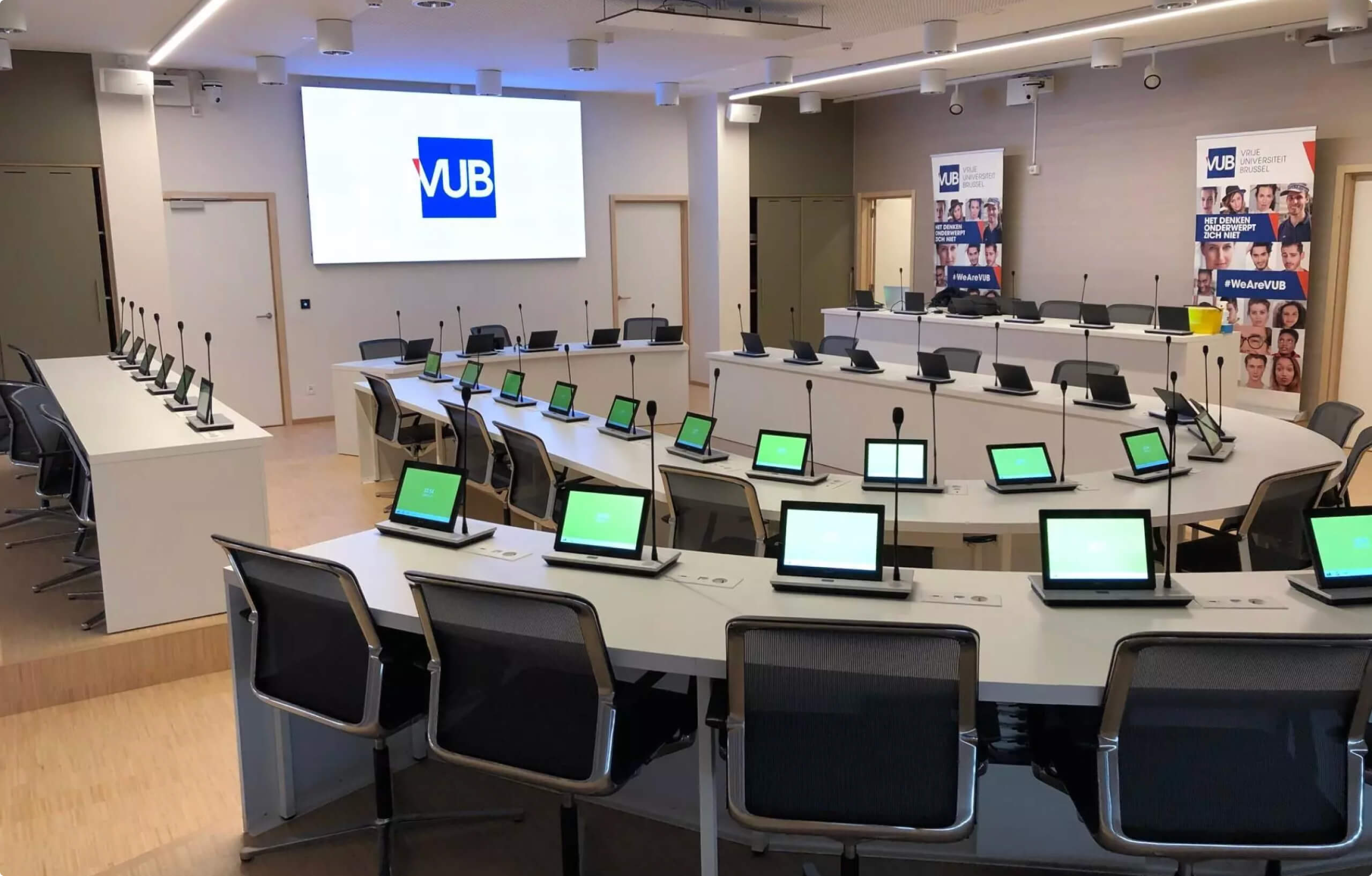
The way we meet has quietly but fundamentally changed. What was once a room-bound activity—people gathering around a table, speaking in turn—has evolved into something far more fluid. Today, meetings span locations, time zones, and formats, with some participants in the room while others join remotely. This shift toward hybrid meetings is not temporary. It reflects a deeper transformation in how organizations operate, collaborate, and make decisions. And yet, despite this shift, many meetings still rely on setups designed for a different era.
Hybrid meetings promise flexibility, but in reality, they often create imbalance. Conversations tend to favor those physically present. Side discussions happen naturally in the room. Visual cues are easier to pick up. Even something as basic as audibility is more reliable for those seated at the table. Remote participants, on the other hand, are often left trying to catch up—struggling with unclear audio, missing context, or hesitating to jump into the conversation. Over time, this creates a gap in participation. And when participation becomes uneven, decision-making suffers.
The issue is not hybrid meetings themselves—it is how they are implemented. Many setups simply layer video conferencing onto traditional meeting rooms, assuming that connection alone is enough. But hybrid meetings are not just in-person meetings with a screen added in. They are an entirely different format, one that requires a more intentional design. Without that design, meetings become fragmented, disjointed, and harder to follow.
This is where systems like those from Televic come in. Rather than treating meetings as a collection of devices, Televic approaches them as structured environments—where every participant, whether in-room or remote, is part of the same conversation.
The goal is simple: to create continuity. Speakers are heard clearly. Transitions between participants feel natural. The flow of discussion remains intact, regardless of where people are joining from. Remote participants are no longer an afterthought—they are integrated into the meeting as active contributors. By aligning how conversations are managed across different environments, the gap between in-room and remote experiences begins to close.
Hybrid meetings also demand a stronger sense of structure. Without it, discussions can easily break down—people speak over one another, participation becomes uneven, and the rhythm of the meeting is lost. Televic systems help restore that balance by guiding how conversations unfold. Speaking turns are managed more smoothly. Contributions are more intentional. The discussion becomes easier to follow for everyone involved. This kind of structure is not about control—it is about clarity.
As hybrid work becomes the norm, meetings are no longer just about being present—they are about being able to contribute meaningfully, wherever you are. This requires more than basic connectivity. It requires an environment where communication is consistent, inclusive, and designed to support real collaboration. Because ultimately, hybrid meetings don’t fail because of distance. They fail when the experience is not shared equally.
The shift to hybrid is already here. The question is no longer whether organizations will adopt it, but whether their meeting environments can keep up. Those that do will find that hybrid meetings can be just as effective—if not more so—than traditional ones. Because in the end, the success of a meeting is not defined by where people sit. It is defined by how well they are able to connect, contribute, and move forward together.