June 15, 2026
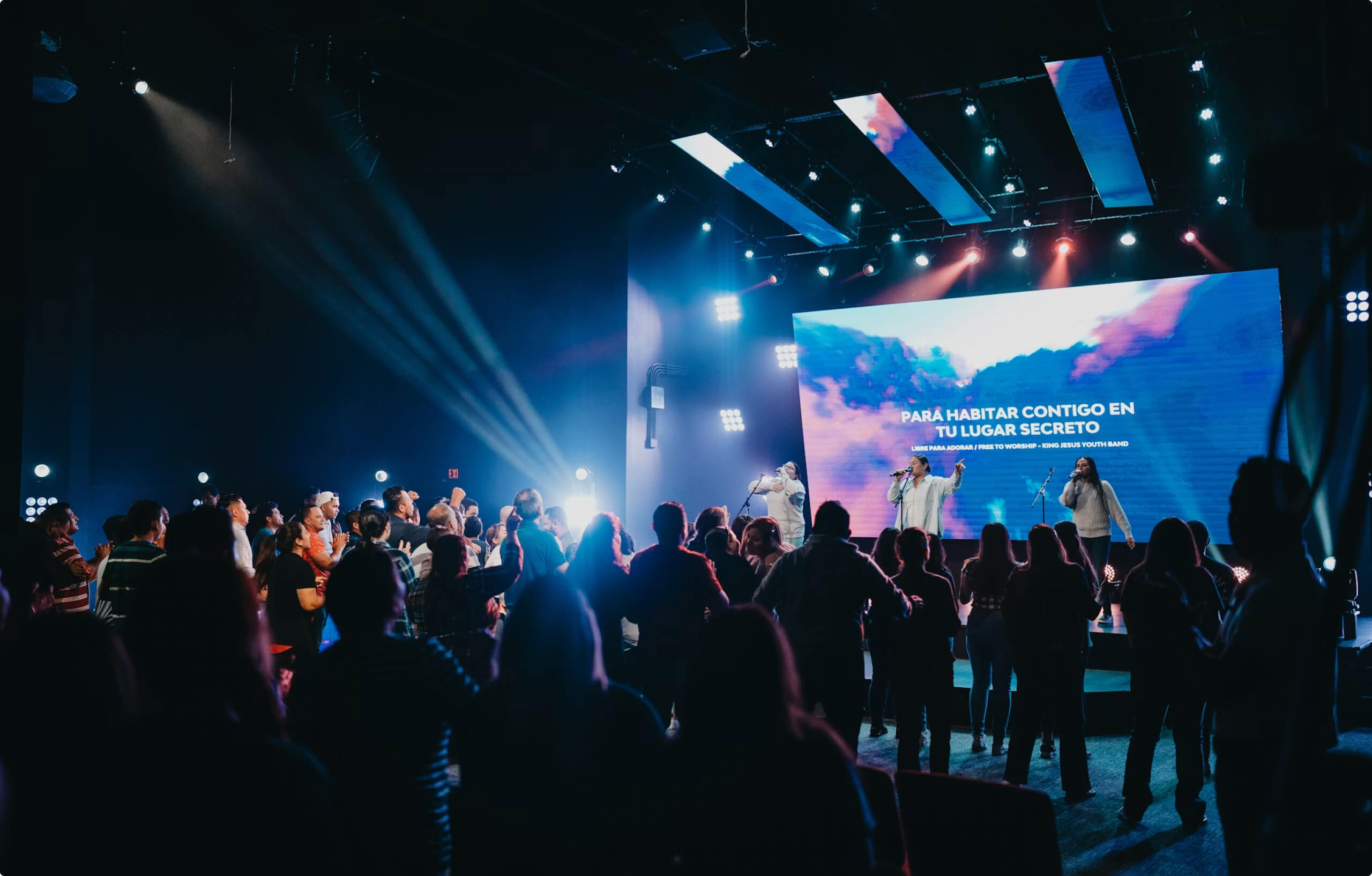
You can book an exceptional venue, secure a compelling speaker lineup, design an outstanding run of show, and still deliver a disappointing event — if the audio-visual production falls short.
This is not a hypothetical risk. Poor sound coverage, unreliable displays, a failed live stream, or a technical glitch during the keynote all have the same effect: they pull the audience's attention away from the content and onto the problem. In a large-scale corporate conference, where the investment in attendance, speakers, and logistics runs into hundreds of thousands of dollars, an AV failure is not just a technical inconvenience. It is a measurable damage to brand credibility, sponsor satisfaction, and event ROI.
The good news is that AV failures at large events are not always caused by equipment. They are caused by planning — specifically, by inadequate preparation, insufficient technical rehearsal, and misaligned expectations between event teams and AV providers. Addressing the planning process is where the risk is eliminated.
This guide is written for Marketing Managers, event procurement teams, Facilities Managers, and anyone responsible for delivering a large-scale corporate event. It walks through the complete AV planning process — from initial scoping to on-site execution — and identifies the decisions that most commonly determine whether an event runs seamlessly or struggles through preventable technical problems.
The cost of cutting budgets short is rarely just a lower-quality picture or a slightly muddy speaker feed. It is the accumulated impression that attendees, sponsors, and leadership carry away from the event. Clear sound, sharp visuals, and technically seamless transitions tell an audience that the organisation takes the occasion seriously. The inverse communicates something that no post-event survey can easily reverse.
AV is also, increasingly, a revenue-relevant line item. When sponsors pay for brand visibility on LED walls, banners, and branded screens, the quality of those displays directly affects their perception of value and their likelihood of renewing. When sessions are recorded or live-streamed to remote audiences who could not attend in person, the broadcast quality determines whether that content remains useful and shareable beyond the event day itself.
The most effective AV planning begins well before any equipment is specified or any provider is contacted. The first phase is scoping: defining the event parameters that will drive every technical decision downstream.
The number of attendees and how they are distributed across the venue governs almost every AV specification. A 500-person plenary session requires fundamentally different audio coverage and screen sizing than four simultaneous 125-person breakout sessions. Both require different approaches again from a 50-person executive dinner that is also being live-streamed.
For large venues, this includes understanding sightlines — where the furthest seats are relative to the primary stage, whether there are pillars or overhangs that create dead zones in speaker coverage, and whether ceiling height supports rigged or flown speaker systems versus floor-stacked alternatives.
What will actually be displayed and presented on stage matters enormously to the technical brief. A keynote with video playback, live demonstrations, and real-time data integrations requires a fundamentally more capable signal management system than a standard slide presentation from a single laptop. Panel discussions with multiple participants need a different microphone strategy than a single-speaker keynote. Award ceremonies with scripted lighting cues demand a different production crew than an unscripted town hall.
Understanding the content programme before specifying AV equipment ensures that the technical setup serves the event rather than constraining it.
One of the most significant planning variables for modern corporate events is whether the event will have a virtual audience component. According to research from Skift Meetings, over 70% of events now include a virtual attendance option — a figure that has fundamentally changed the AV brief for large-scale conferences. Hybrid capability is no longer a premium addition; for many organisations, it is an expectation.
A high-quality hybrid setup requires more than placing a camera at the back of the room and pushing the feed to a streaming platform. It requires dedicated cameras capable of capturing stage and speaker content cleanly, a vision mixer to switch between camera angles and presentation content, a clean audio feed from the production console to the stream, sufficient and dedicated internet bandwidth, and an encoder to deliver that feed to the streaming destination. Each of these components has its own failure mode — which means each requires its own redundancy planning.
The distinction between a professional live stream and an improvised one is immediately apparent to remote audiences. Events with broadcast-quality production retain virtual attendee engagement at significantly higher rates than events relying on basic webcam setups. For organisations where the virtual audience may represent a significant portion of total attendance, this production quality gap has direct implications for event value.
Not all venues are created equal from an AV perspective, and this is a factor that is routinely underestimated in early planning. Before committing to a venue for a large-scale event, an infrastructure assessment should cover:
For event planners who are not AV specialists, understanding what a corporate event AV system consists of — and how the components relate to each other — helps enormously in briefing, reviewing proposals, and managing the production on the day.
Audio is the most consequential component of any corporate event AV setup — and the most frequently underestimated. An audience that cannot comfortably hear a speaker will disengage within minutes, regardless of how good the content is or how impressive the visual production. A screen that is smaller than ideal is inconvenient. A speaker feed that is unclear, uneven, or plagued by feedback is an event failure.
A professional audio system for a large corporate event consists of several interconnected components:
Microphones are selected based on how presenters and panellists will move and perform on stage. Lavalier (clip-on) microphones are the standard for keynote speakers who move across a stage — they free the presenter from a fixed position while maintaining consistent audio pickup. Handheld wireless microphones suit Q&A sessions and audience interaction. Podium or gooseneck microphones are appropriate for formal, fixed-position presentations. Large panels with multiple simultaneous speakers require a microphone for each position, managed through a mixing console to ensure balanced levels.
Speaker systems must be designed to deliver consistent coverage across the entire audience area — not just the front rows. Large venues with significant depth require line-array systems, which are tuned arrays of speaker elements designed to maintain even volume and clarity at long distances. The difference between a well-tuned line-array and a poorly distributed PA system is audible from the back of any large conference room.
Mixing and signal management is the operational core of the audio system — the console and associated equipment that takes all input sources (microphones, video audio, presentation audio, broadcast feeds) and balances them into a coherent output. For complex events, this requires an experienced audio engineer who understands both the technical parameters and the programme flow.
For large conferences with multiple rooms, a distributed audio architecture ensures that breakout spaces, foyer areas, and registration zones each receive appropriate audio coverage without requiring separate isolated systems for each.
The visual system for a corporate conference serves two distinct audiences: people in the room who need to see presenter content and stage action clearly, and remote viewers watching via stream or recording.
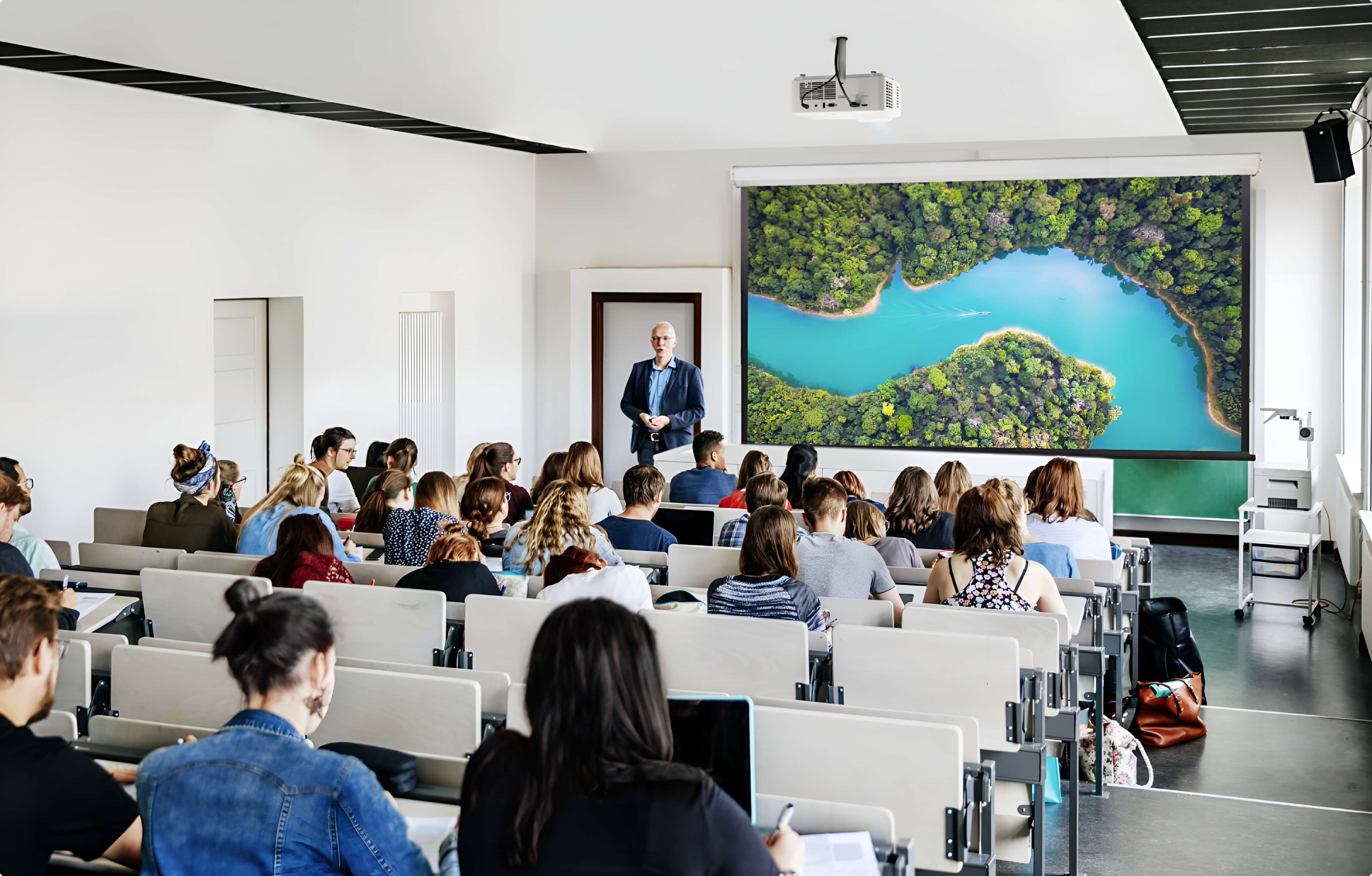
For in-room audiences, the key specification decisions are screen size relative to room depth, display technology (LED video wall versus projection), and placement to avoid sightline obstructions.
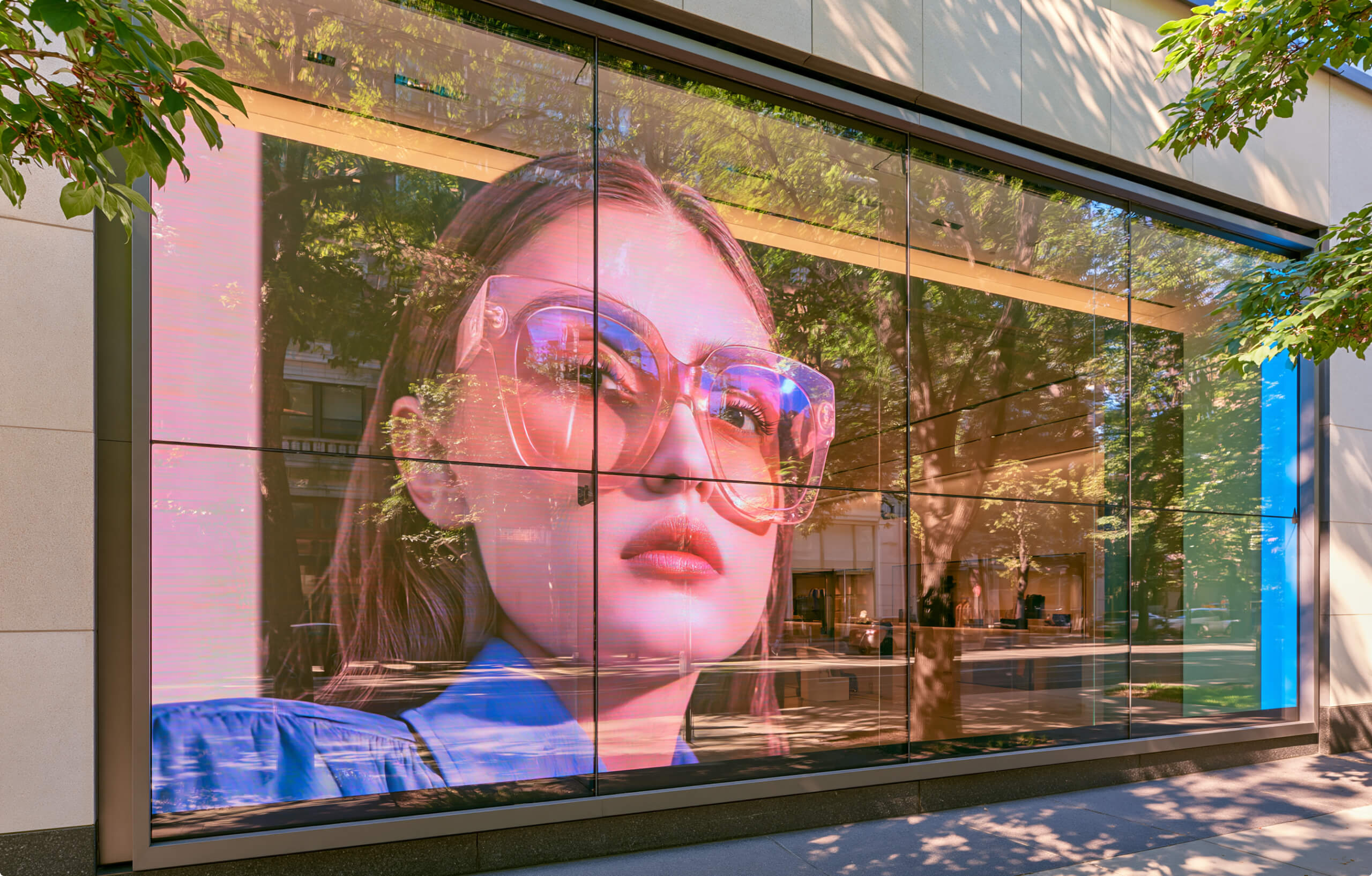
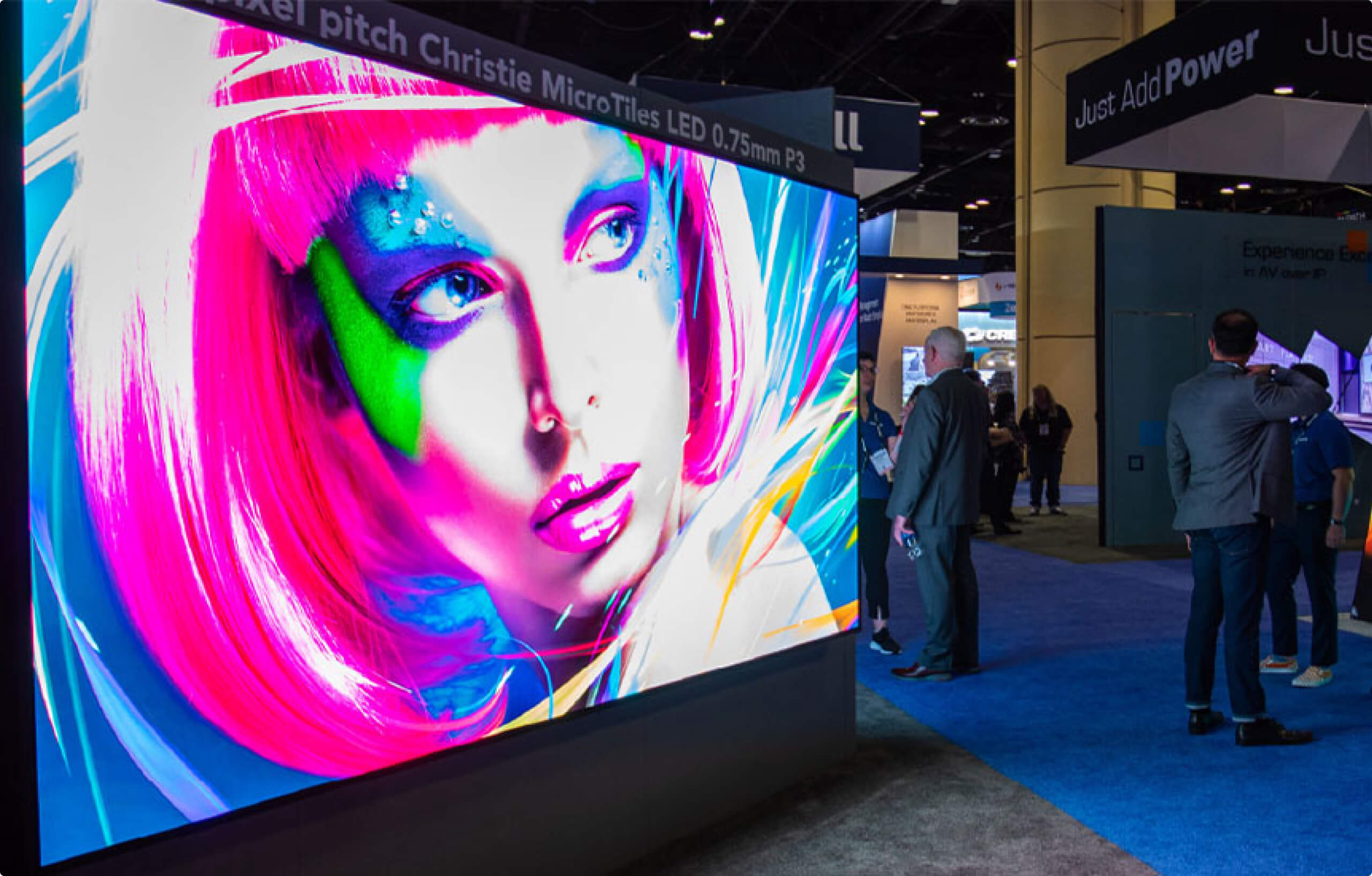
LED video walls have become the preferred choice for large-scale corporate events, particularly in keynote and main stage environments. They offer significantly higher brightness than projection — critical in venues with ambient lighting that cannot be fully controlled — along with a seamless display surface, vibrant colour reproduction, and the ability to display custom-resolution content without the seam issues that affect multi-projector setups. LED walls also work well as branded stage backdrops, integrating visual content with the physical stage environment in ways that projection cannot achieve as cleanly.
Projection remains a cost-effective option for breakout rooms, smaller sessions, and applications where room depth allows for adequate throw distance and ambient light can be managed. For very large main stages, high-lumen projection systems can perform effectively — but they typically require careful room lighting control and are more vulnerable to ambient light degradation than LED.
For larger conference halls with 200 or more attendees, IMAG (Image Magnification) — live camera feeds of the speaker projected onto side screens — significantly improves the experience for audience members seated far from the stage, who would otherwise be watching a distant figure rather than an engaged presenter. IMAG requires cameras positioned to capture clear, close-up shots of speakers, a vision mixer to handle live switching, and additional screen surfaces positioned at angles that complement the main stage display.
Stage and event lighting is frequently treated as an aesthetic consideration, but its functional role in a corporate conference is more fundamental than it might appear. Lighting determines whether speakers are clearly visible from all audience positions, whether cameras can capture clean, professional footage, and whether the visual tone of the event communicates the intended brand message.
For corporate events, lighting design typically covers three functions: stage lighting to illuminate speakers clearly and evenly for both the live audience and cameras; audience lighting to ensure attendees can take notes, read materials, and move safely; and atmospheric or branded lighting to reinforce visual identity through colour, gobo patterns, or dynamic changes that mark transitions between sessions.
For events using IMAG or recording cameras, the quality of stage lighting directly affects the quality of all captured footage. Underlit or unevenly lit stages produce footage that looks unprofessional regardless of the quality of the camera equipment.
In a large-scale event AV system, the various components — audio consoles, video walls, cameras, streaming encoders, presentation management systems — must all communicate with each other reliably, in real time, and with clear operational ownership. This coordination function is called show control, and it is the element of event AV production that most separates experienced providers from less capable ones.
A well-designed show control infrastructure uses standardised protocols to ensure that a presenter advancing their slide deck triggers the correct response on every screen in the room, that a video playback starts on cue without the audio team needing a separate instruction, and that transitions between speakers happen smoothly without visible artefacts or audio gaps. The operational failure modes of show control — screen flicker at the wrong moment, audio that lags video, presentation content that does not display correctly on confidence monitors — are among the most visible and disruptive problems that occur during live events.
For any large-scale corporate event, the question is not whether something will go wrong — it is what will go wrong and how quickly the team will identify and resolve it.
Professional event AV design includes redundancy at every critical point: backup presentation sources in case a presenter's laptop fails, backup wireless microphone channels for each speaker, backup streaming encoders in case of encoder failure, and uninterruptible power supply (UPS) units protecting core signal management equipment from power fluctuations.
Beyond hardware redundancy, risk planning means having a designated technical director on site whose sole responsibility is monitoring system performance and executing contingency responses. An experienced technical director has seen enough event AV failures to anticipate them before they become visible to the audience — and to resolve them quickly when they do occur.
The technical rehearsal — typically scheduled the day before or the morning of the event — is the primary risk mitigation tool in event AV production. A full rehearsal, with all presenters running their content on the actual production system, is the only reliable way to discover compatibility issues, audio level problems, video format mismatches, and timing coordination gaps before they affect a live audience. Events that skip or truncate the technical rehearsal do so at measurable risk.
The quality of the proposal and the accuracy of the quote you receive from an AV provider are directly proportional to the quality of the brief you provide. Vague briefs produce generic proposals that may not reflect the actual technical requirements of your event, and the gaps are often discovered at the worst possible time — during setup or on the day itself.
A comprehensive AV brief for a large-scale corporate event should include:
Providing this level of detail in the briefing stage — ideally three to six months before the event for large-scale conferences — gives your AV partner the information needed to design a system that actually fits your event, rather than a generic package adapted on the day.
The distinction between an AV equipment supplier and an AV solutions partner is most apparent in large-scale event contexts. An equipment supplier provides the gear. A solutions partner provides the system design, the experienced crew, the technical direction, and the accountability for making the event work.
For large-scale corporate conferences, the crew is often as important as the equipment. Experienced audio engineers, vision mixers, lighting operators, and technical directors have developed the situational awareness to manage live events — to anticipate transitions, respond to unplanned changes in the programme, and troubleshoot problems without disrupting the audience. This is not a capability that can be acquired by renting the right equipment; it is built through years of live event production.
When evaluating AV providers for a major event, the relevant questions go beyond equipment lists and pricing:
The last point matters more than it might appear. An AV provider who has worked in a venue before will have documented knowledge of its acoustic properties, its power infrastructure, its rigging constraints, and its in-house arrangements — knowledge that translates directly into a more accurate proposal and a smoother load-in.
For reference, the following timeline reflects best-practice planning stages for a large-scale corporate conference:
9–12 months before: Confirm venue and begin AV partner conversations. Assess venue infrastructure and establish technical constraints.
6 months before: Issue full AV brief and review proposals. Confirm AV partner and begin detailed system design.
3 months before: Finalise programme structure and room-by-room AV requirements. Begin presenter briefing process to establish content formats and technical requirements.
6–8 weeks before: Confirm presenter content formats and test compatibility with production system where possible. Finalise run-of-show with technical cues.
1–2 weeks before: Technical walkthrough with AV team at venue. Confirm power, rigging, and access arrangements.
Day before event: Full load-in and system build. Technical rehearsal with all speakers and content.
Event day: AV team on site from early morning for final checks and system verification before doors open.
Large-scale corporate events represent significant investments — in budget, in time, in organisational attention, and in the brand impression they create for attendees, speakers, and sponsors. The AV production is not a supporting element of that investment. It is the infrastructure through which the entire event experience is delivered.
Planning it well means starting early, briefing thoroughly, specifying correctly for each component of the programme, building in redundancy at every critical point, and partnering with a provider whose experience and accountability match the ambition of the event.
Done right, the AV is invisible — attendees focus on the content, the conversations, and the experience. Done poorly, it is the only thing anyone remembers.
The Brain Computer Corporation works with corporate event teams, marketing departments, and procurement managers to plan, supply, and operate AV systems for large-scale conferences, product launches, and corporate events. From LED video walls and professional audio to hybrid streaming infrastructure and full technical production support, our team brings the expertise and equipment to ensure your event runs exactly as planned. If you are in the early stages of planning a major event, we are happy to discuss your requirements and provide a detailed assessment of what your programme will need.