April 17, 2026
Meetings are meant to bring clarity and drive decisions. Yet in many organizations, they do the opposite—dragging on without clear outcomes, revisiting the same points, and leaving participants uncertain about what was actually decided. The issue is rarely a lack of ideas. More often, it’s a lack of alignment.
Decisions slow down when conversations lose direction. Without a clear flow, discussions tend to branch out, overlap, or circle back on themselves. Some voices dominate while others hold back. Key points get lost, and moments that should lead to resolution pass without conclusion. Over time, this creates hesitation. Instead of moving forward, teams defer decisions, waiting for more clarity that never fully arrives.
When decisions are delayed, the impact extends beyond the meeting itself. Projects slow down. Teams become misaligned. Momentum is lost. And what could have been resolved in one focused discussion often spills into multiple follow-ups. The longer this pattern continues, the more meetings become a place for discussion rather than action.
Faster decision-making is not about rushing—it’s about clarity and structure. When conversations are guided with intention, participants understand when to contribute, when to listen, and when to move toward resolution. Discussions become easier to follow, and key moments are less likely to be missed. This creates a natural progression—from input, to alignment, to decision.
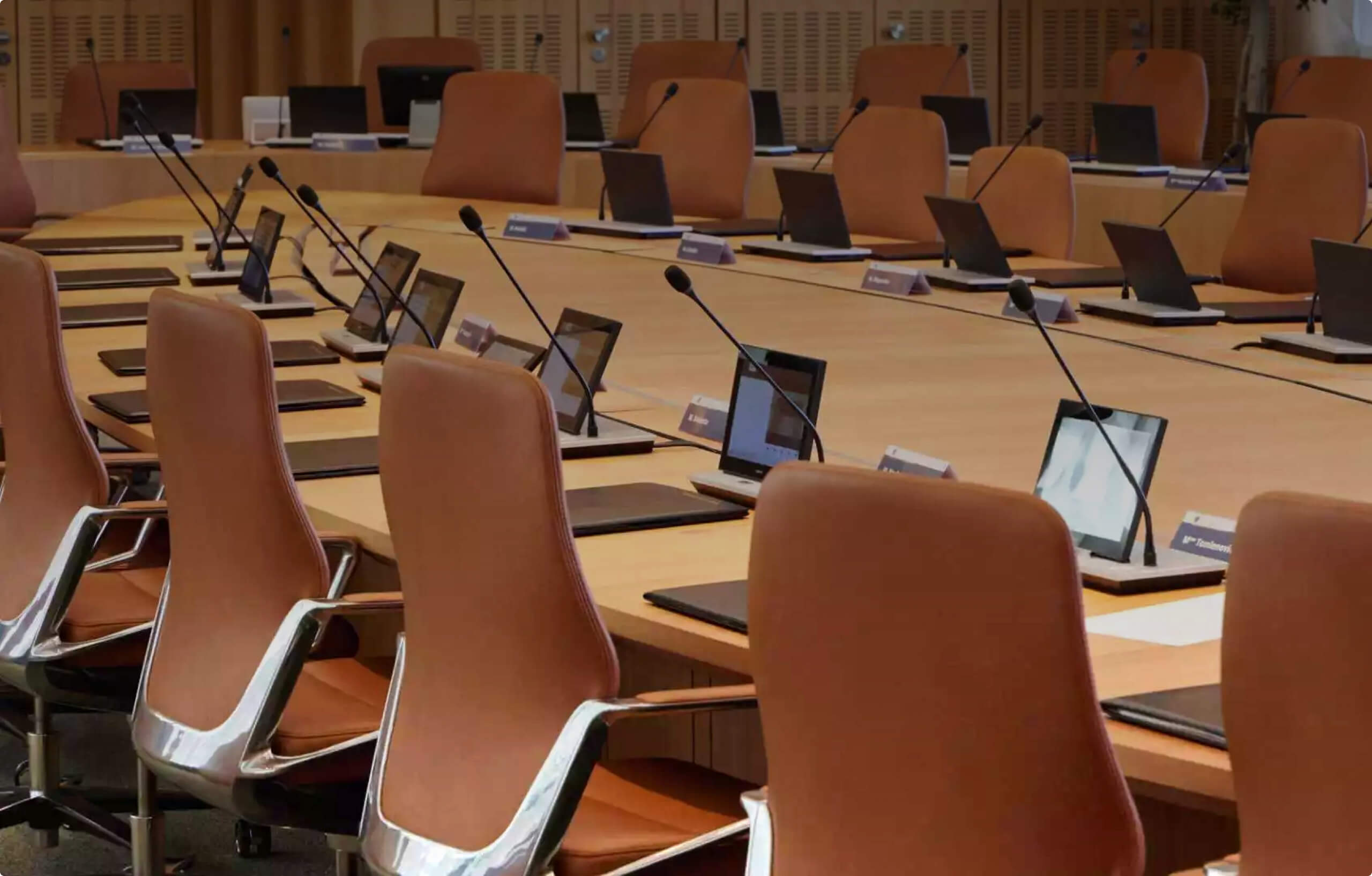
This is where systems like those from Televic play a role. Rather than leaving meetings to unfold organically, Televic enables a more structured environment—one where participation is balanced, conversations are easier to follow, and discussions move with purpose. By supporting a clearer flow of communication, meetings become less about navigating chaos and more about arriving at decisions efficiently.
At its best, a meeting should create direction. When conversations are clear, participation is balanced, and structure is in place, decisions happen more naturally. Teams leave aligned, knowing not just what was discussed, but what comes next. Because ultimately, the value of a meeting is not measured by how much is said—
but by how effectively it leads to action.