April 27, 2026
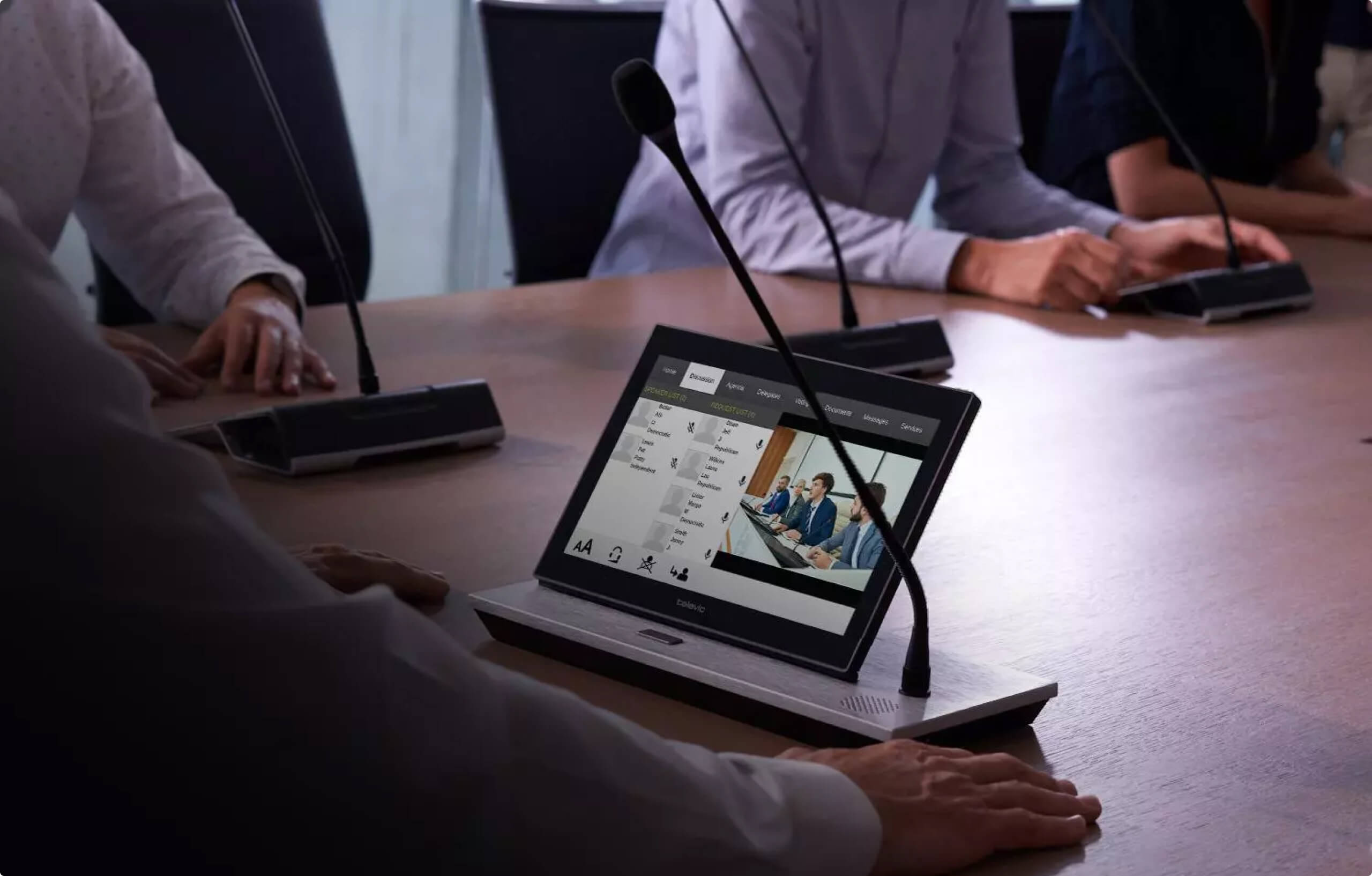
Most meetings are treated as simple exchanges. People gather, speak, respond, and move on. But in reality, every meeting operates as a system—one that involves coordination, sequencing, and structure, whether intentionally designed or not.
In high-stakes environments such as boardrooms, government councils, and international conferences, this becomes even more apparent. Discussions are not left to chance. Speaking turns are managed, contributions are tracked, and decisions follow a defined process. These settings recognize something many everyday meetings overlook: the way a conversation is structured directly impacts the quality of its outcomes.
When meetings are treated casually, they tend to rely on personalities and improvisation. When they are treated as systems, they rely on clarity and design.
In many organizations, meetings are scheduled without much thought given to how they will actually run. An agenda may exist, but beyond that, the flow of conversation is often left to unfold naturally.
This is where problems begin to surface. In a typical team meeting, for example, a few individuals may dominate the discussion while others remain silent—not necessarily because they lack input, but because there is no clear structure guiding participation. Conversations may drift off-topic, circle back to previously discussed points, or stall entirely when no one takes ownership of moving things forward.
Over time, this lack of structure leads to inefficiencies that compound. Meetings run longer than expected. Decisions are postponed. Follow-up meetings are scheduled to resolve what could have been addressed in a single session. What appears to be a minor issue in flow becomes a recurring drain on time and momentum.
When meetings are approached as systems, these inefficiencies begin to disappear—not because people behave differently, but because the environment supports better interaction.
In a well-designed meeting, participants know when and how to contribute. Discussions move with a sense of progression, rather than jumping between unrelated points. Each contribution builds on the previous one, creating a clearer path toward alignment and decision-making.
Consider large-scale environments such as parliamentary sessions or corporate board meetings. In these settings, structure is not optional. There are clear processes for speaking, responding, and concluding discussions. This ensures that even with dozens—or hundreds—of participants, conversations remain orderly and productive.
While not every organization operates at that scale, the principle remains the same: structure enables clarity, and clarity enables better outcomes.
Many organizations attempt to improve meetings by upgrading tools—adding better microphones, larger displays, or video conferencing platforms. While these enhancements can improve certain aspects of communication, they do not address the underlying issue.
A meeting can have excellent audio and still feel chaotic. It can have a high-resolution display and still lack direction.
What truly transforms a meeting is not just better equipment, but a system that supports how communication happens. This includes how participants signal their intent to speak, how discussions are moderated, and how conversations are guided toward resolution.
In other words, tools support meetings—but structure defines them.
This is where Televic brings a different perspective. Televic’s solutions are used in environments where communication cannot afford to break down—such as government assemblies, corporate boardrooms, and international institutions. In these settings, meetings are not simply about exchanging ideas; they are about ensuring that every contribution is heard, every discussion is clear, and every decision is made with confidence.
Rather than focusing on individual components, Televic designs meeting environments as integrated systems. This means aligning how participants speak, listen, and interact within a structured framework that supports clarity and flow.
For example, in large council meetings where multiple stakeholders are involved, maintaining order in discussions is critical. Systems that guide participation and ensure clear communication help prevent overlap, reduce confusion, and keep the meeting focused on its objectives.
The result is not just a more organized meeting, but a more effective one.
When meetings are treated as systems, their purpose becomes clearer. They are no longer just spaces for discussion, but environments designed to move ideas forward. Participants leave not just having shared opinions, but with a shared understanding of what has been decided and what comes next.
This shift is especially important in fast-moving organizations, where delays in decision-making can have broader implications. A meeting that leads to clear direction can accelerate progress. One that does not can slow everything down.
The difference lies in how the meeting is structured.
The transition from conversation to system is subtle, but powerful. It does not require completely rethinking how meetings are held, but rather recognizing that how a meeting is designed shapes everything that happens within it.
Organizations that adopt this mindset begin to see meetings not as routine obligations, but as opportunities to create clarity, alignment, and momentum.
Because ultimately, the effectiveness of a meeting is not measured by how much is discussed— but by how clearly it leads to action.